The Role of Regular Inspections in Extending Sewer Lifespan: Practical Strategies for Maintenance and Longevity

Stefani • January 11, 2026

Share this article

You count on your sewer system every day, but unseen damage can cut its life short. When we inspect sewer lines regularly, we catch small problems early, fix them cheaply, and keep pipes working longer. That simple step saves money and stops sudden failures.

We will show what inspections spot, how modern tools find hidden faults, and why routine checks pay off over time. Stay with us to learn practical steps you can take to protect your sewer system and avoid costly repairs.

Why Regular Inspections Are Essential for Sewer Lifespan

Regular inspections catch small problems early, protect infrastructure, and keep neighborhoods safe. We focus on finding cracks, root intrusion, and buildup before they turn into major failures.

Preventing Costly Repairs and Disruptions

We inspect sewer lines to find wear, cracks, and offsets before they fail. Using camera sewer line inspections, we spot fractures, bellied pipes, and joint separation that lead to collapses. Fixing a small crack with a liner or targeted joint repair often costs a fraction of a full trench excavation.

We prioritize pipes with known issues and older materials like clay or cast iron. That reduces emergency shutdowns and long street closures. Regular preventive maintenance scheduling also lets us plan budgets, order parts, and avoid overtime labor fees.

Mitigating Root Intrusion and Blockages

Tree root intrusion commonly enters through hairline cracks and faulty joints. We detect root penetration early with CCTV inspections and high-pressure flushing reports. Removing roots while the pipe is mostly intact prevents repeated blockages and more invasive repairs.

We map root-prone zones near large trees and adjust inspection frequency accordingly. Mechanical cutting, chemical treatment, or cured-in-place pipe lining can stop roots without full pipe replacement. Early action preserves pipe integrity and keeps sewer flow steady.

Safeguarding Public Health and Environment

We look for leaks, cross-connections, and sanitary sewer overflows that risk contamination. Even small leaks can let sewage seep into soil and groundwater, affecting wells and parks. Regular sewer inspections allow us to repair compromised sections before pathogens reach people or ecosystems.

We monitor solids buildup and grease that cause backups into homes and streets. Timely cleaning and repairs reduce odor complaints, vermin attraction, and infection risks. Protecting sewer lines through inspection keeps our community’s water and public spaces safer.

Key Issues Detected Through Sewer Line Inspections

Inspections reveal specific problems that shorten sewer life and raise repair costs. We find corrosion, blockages, backups, and pipe collapse, and we note where each risk starts to threaten the whole system.

Early Identification of Pipe Corrosion and Deterioration

We use camera inspections to spot rust, pitting, cracks, and thinning walls in metal and clay pipes. Corrosion often starts at joints or near root intrusions; catching it early lets us plan targeted repairs like spot replacement or relining before full failure occurs.

We document material loss and measure wall thickness where possible. That data helps us schedule maintenance and prioritize sections that need relining, cementitious coatings, or replacement to prevent leaks and soil contamination.

We also watch for chemical attack signs from sulfates or hydrogen sulfide that eat away at concrete. When we detect these, we advise on chemical-resistant lining and odor control to slow deterioration.

Detecting Sewer Line Blockages and Debris Buildup

We identify hair, grease, sanitary products, and mineral scale that form partial or full blockages. Video shows the blockage size, location, and whether it is recurring in the same spot, which tells us if root cutting, jetting, or operator education is needed.

We track debris buildup patterns inside bends, low-flow sections, and flat pipes collect the most material. Regular removal prevents slow drainage and reduces pressure on joints and pipe walls.

We record whether blockages are hard scale or soft organic matter. Hard scale may need mechanical cutting or chemical treatment; soft matter often responds to hydro-jetting and improved grease traps.

Addressing Sewer Backups and Slow Drains

We trace backups to their source collapsed sections, severe blockage, or improper slope. Finding the exact cause on video helps us pick the right fix, like sectional replacement, root removal, or regrading a line to restore flow.

We note slow drainage areas caused by partial blockages or lost slope from sediment buildup. Timely cleaning restores capacity and prevents backups into basements or fixtures.

We also check service connections and clean-outs for proper access. If we see repeated backups at the same fixture, we recommend targeted repair or rerouting to protect homes and businesses from sewage exposure.

Recognizing Collapsed or Misaligned Pipes

We spot collapsed pipes by flattened shapes, crushed crowns, or sudden gaps in the video feed. Misalignment shows as offset joints or sharp deflections where flow sticks. Both conditions cause severe blockage and structural risk.

We mark collapsed or misaligned sections for urgent repair because they let soil intrude and change flow paths. Solutions include pipe bursting, sectional replacement, or internal lining with structural reinforcement.

We evaluate surrounding conditions, such as heavy loads above or shifting soils, that likely caused collapse. That lets us recommend surface repairs or load redistribution along with the pipe work to prevent recurrence.

Inspection Technologies and Modern Solutions

We focus on tools that show pipe condition, find exact failures, and fix lines with less digging. These tools save time, cut cost, and extend sewer lifespan when used correctly.

Camera Inspection and Advanced Imaging Tools

We use sewer cameras to look inside pipes without digging. A push camera or crawler sends live video and records defects like cracks, offsets, root intrusions, and grease build-up. High‑resolution cameras with pan-and-tilt let us inspect bends and junctions.

We log distance markers and link video to digital reports so we can track condition over time. Thermal and sonar imaging add value in special cases, such as locating voids around pipes or detecting leaks under slabs.

Detailed camera inspection helps us choose the right repair method and avoid unnecessary replacement. It also documents pre- and post-repair conditions for warranties and compliance.

Trenchless Technology for Repairs and Replacement

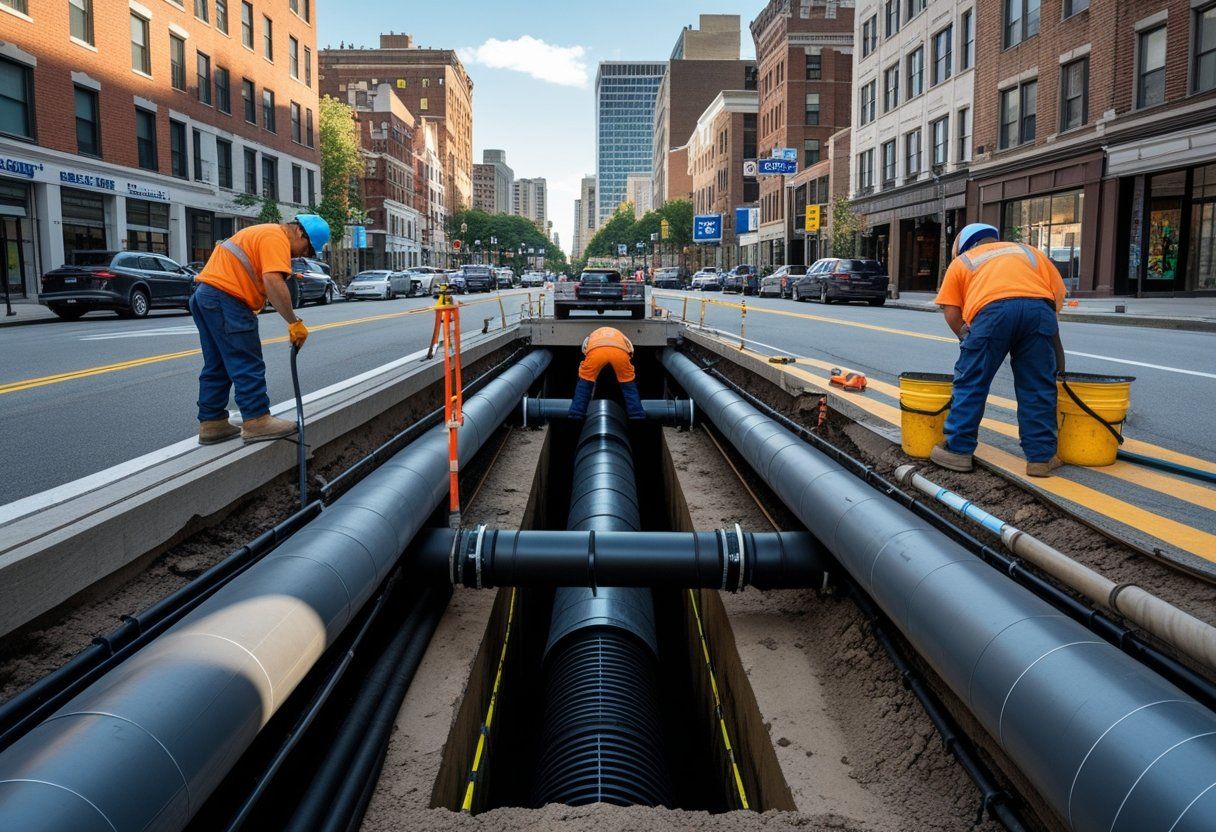
We rely on trenchless technology to repair or replace sewer lines with minimal surface disruption. For many jobs we use pipe relining (CIPP) to install a resin-saturated liner inside the existing pipe, curing it in place to form a new seamless pipe. This stops leaks, seals cracks, and resists root growth.

When a full replacement is required, we use pipe bursting to fracture the old pipe while pulling a new pipe into place. Both methods cut excavation time, lower restoration costs, and reduce traffic or landscape impact.

We select trenchless options based on pipe material, diameter, degree of collapse, and access points shown by camera inspection.

Hydro Jetting and Pipe Relining Methods

We apply hydro jetting to clear heavy grease, mineral scale, and roots before we relining or repairing. High-pressure water jets (1,500–4,000 psi for sewers) scour the pipe walls and restore flow capacity. Jetting improves adhesion for resin in pipe relining and reduces the chance of early failure.

For relining, we use cured-in-place pipe (CIPP) liners or sectional liners depending on defect type. CIPP provides a continuous new pipe with long life; sectional liners fix short damaged areas. We cure liners using hot water, steam, or UV light based on resin specs.

Combining hydro jetting, camera inspection, and relining lets us avoid full sewer line replacement in many cases while reliably extending the service life of the system.

Long-Term Benefits of Regular Sewer Inspections

Regular inspections reduce surprises, document pipe condition, and guide repairs so we can protect value, meet rules, and extend service life.

Protecting Property Value and Investment

Regular sewer inspections help maintain property value by catching sewer line problems early. We find root intrusion, cracks, and offsets before they cause backups or sinkholes that lower market value.

Inspection reports give buyers and appraisers clear proof of pipe condition. A dated report showing recent pipe lining or repairs reassures buyers and helps justify asking price.

When we schedule inspections every 3-5 years for older systems, we limit emergency repairs that disrupt tenants and harm curb appeal.

Replacing or lining a small section after inspection costs far less than full pipe replacement later. That cost control keeps our investment predictable and preserves resale value.

Compliance, Reporting, and Maintenance Planning

Inspection reports serve as official records for regulators and insurers. We document defects, repair dates, and materials used, which simplifies permit applications and insurance claims.

Knowing where damage exists lets us plan pipe lining or targeted repairs instead of reactive fixes. We list priorities and budgets in each report so maintenance teams act on the highest-risk segments first.

Regular inspections also help us meet local sewer ordinances and inspection schedules. Staying compliant reduces fines and prevents forced emergency work that raises costs.

Clear records improve contractor bids because scope and condition are precisely defined. That saves time and avoids costly change orders.

Improving System Reliability and Longevity

We use inspection data to extend sewer lifespan through timely interventions like pipe lining and spot repairs. Lining small cracks prevents infiltration and slows corrosion, preserving pipe strength.

Targeted repairs stop minor leaks before they undermine pipe bedding or adjacent structures. This prevents costly collapses and reduces the need for full-depth excavation.

Routine inspections let us monitor trends like progressive joint separation or repeated tree-root reentry so we schedule preventative lining or replacement on our terms.

Consistent maintenance based on inspection findings keeps flows clear, reduces backups, and spreads capital costs over time, increasing overall system longevity.

Recent Posts

Fast Response Plumbing technician servicing a water shut off valve in San Francisco
By Joe Tinsley July 17, 2026
Learn how gate valves, ball valves, and angle stops work, where to find them in your San Francisco home, and when to replace them. FAQs inside.
Budgeting for Unforeseen Sewer Line Maintenance Expenses
By Stefani January 31, 2026
Sewer line problems can hit your wallet fast, and we know the stress of a surprise repair. We show you how to plan a practical budget that covers emergency fixes, regular upkeep, and the big costs that sneak up on you. This saves you money and keeps small issues from turning into major failures. We […]
Seasonal Effects on Sewer Line Maintenance Costs
By Stefani January 30, 2026
You’ll want to know how seasons change what you pay for sewer line maintenance so you can plan ahead and avoid surprise bills. Seasonal weather, ground movement, and plant growth directly affect repair needs and costs, so budgeting by season cuts unexpected expenses. We outline what shifts costs, when repairs most often happen, and which […]
The Role of Location in Sewer Line Maintenance Pricing
By Stefani January 29, 2026
You’ll pay different amounts for sewer line maintenance depending on where your property sits and what’s under it. Location drives cost through factors like soil type, access difficulty, local labor rates, and permit rules, so knowing these lets you predict and plan for expenses. We’ll show how those local details shape quotes and outcomes. We’ll […]
Analyzing Material Expenses for Effective Sewer Line Care
By Stefani January 28, 2026
We’ll break down the real costs that matter for keeping a sewer line working well so you can plan and avoid surprises. You’ll learn which materials and fees drive most of the expense and how small choices can lower long-term costs. We’ll look at costs for parts, tools, permits, and regular cleaning, plus where labor […]
Understanding the Impact of Labor Costs on Sewer Line Maintenance
By Stefani January 25, 2026
You want to know how labor costs shape sewer line care and what that means for your wallet. We will show how wages, crew size, and the repair method you choose change the final bill so you can plan smarter and avoid surprises. Knowing which labor factors most drive costs lets you pick repair options […]
How to Interpret Sewer Line Inspection Reports
By Stefani January 24, 2026
You’ll get clear steps to decode the most important parts of a sewer line inspection report so you can act with confidence. We show you how to spot real problems, what each defect means, and which issues need immediate repair versus routine maintenance. We break the report into simple pieces what the camera images show, […]
Tool kit with hard hat, gloves, laptop, and handheld device on a workbench in a workshop
By Stefani January 23, 2026
You want tools that give clear answers fast so you can find problems and fix them right. We rely on high-quality sewer cameras, locating gear, and cleaning tools to spot cracks, blockages, and defects in sewer lines accurately. Knowing which tools to use helps a plumber save time and avoid costly mistakes. We will walk […]
Worker in blue hard hat inspecting a manhole on a street with a camera device
By Stefani January 22, 2026
You want sewer line inspections timed so they catch problems before they get costly or urgent. We recommend scheduling inspections based on seasonal risks winter freeze, spring thaw, and heavy fall rains because timing cuts repair costs and prevents service interruptions. We will explain how weather, soil movement, and tree roots change the risk level […]
Common Mistakes to Avoid During Sewer Line Inspections
By Stefani January 18, 2026
We know sewer line inspections feel technical and tense, but avoiding a few common mistakes protects your home and wallet. Start by planning the inspection, knowing what to look for, and involving a qualified professional when signs point to trouble. That simple approach cuts down on missed problems and costly surprises. We will walk through […]
Show More