How to Use Video Camera Technology for Sewer Line Assessments: A Confident Guide to Inspection Techniques and Best Practices

We’ll show you how to use video camera technology to inspect sewer lines so you can find blockages, cracks, and root intrusions without digging. A sewer camera inspection gives a clear, fast view of the problem and helps you decide whether you can fix it with a targeted repair or need a larger job.

We’ll walk through the camera types, how to set up and run an inspection, and how to spot common issues like offsets, leaks, and buildup. By the end, you’ll know what to expect from the process and how these inspections save time and money on repair planning.

Understanding Video Camera Technology for Sewer Line Assessments

Technician using a video camera device to inspect inside a sewer pipe, viewing live footage on a monitor.

We explain how sewer inspection cameras capture images, what parts make a reliable system, and which camera types suit different pipes and problems. This helps teams choose the right high-resolution camera, understand waterproofing needs, and plan a video camera inspection.

How Sewer Inspection Cameras Work

We push a flexible cable with a high-resolution camera into the pipe. The camera sends live video through a tether to a monitor so we can watch pipe walls, joints, roots, cracks, and blockages in real time.

The camera uses built-in LED lights to brighten dark conditions. Software on our recorder stamps time, distance, and direction on the video. That metadata helps us locate issues precisely for repairs.

We control tilt and pan on many models to inspect crown, invert, and lateral connections. Motorized reels and winches manage cable feed and prevent kinks. For large-diameter mains, we use crawler-mounted cameras that traverse by wheels.

Key Components of a Sewer Camera System

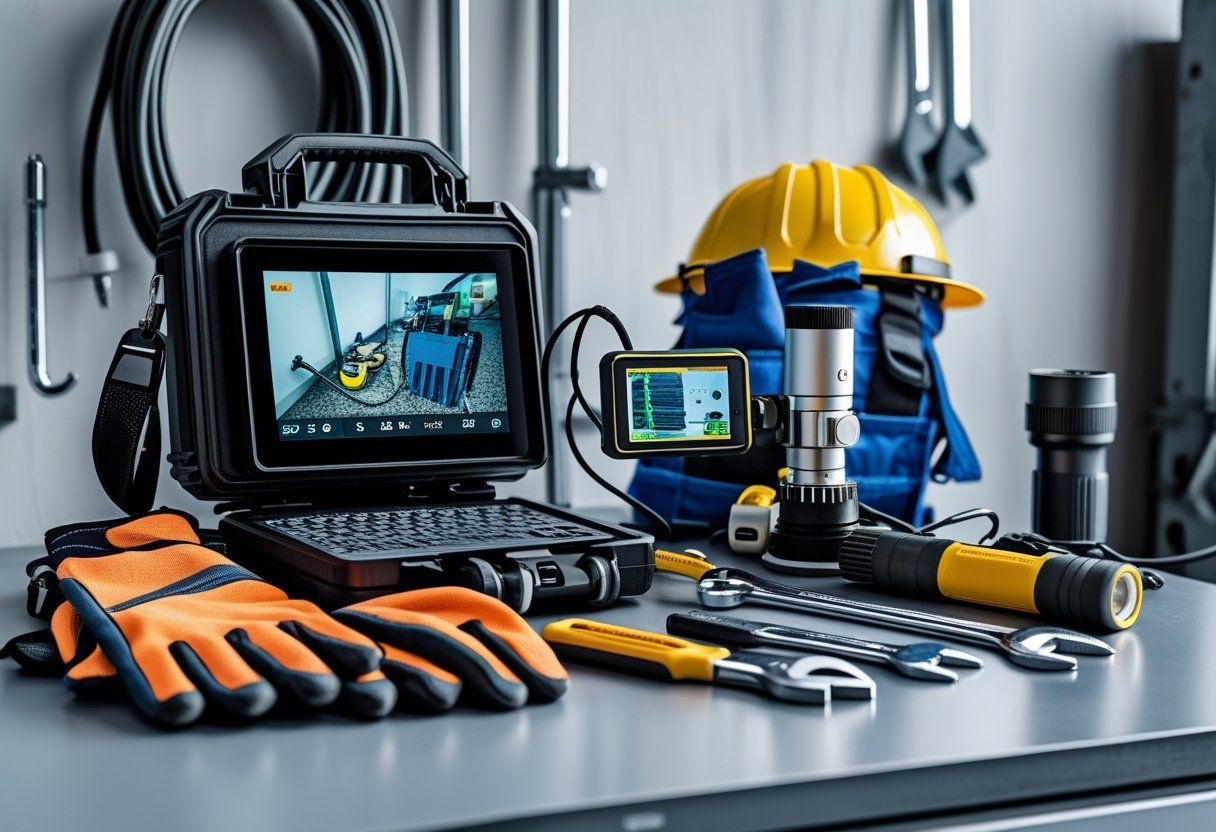
A typical system has: camera head, push cable or crawler, reel/winch, monitor/recorder, lighting, and locating transmitter. The camera head is often waterproof and rated for submersion. We prefer IP68-rated heads for long inspections.

High-resolution CMOS or CCD sensors yield clear images for defect identification. Durable push cable resists abrasion and oil. The monitor should accept SD/HD video and store clips with distance and time stamps.

Locating transmitters attach to the camera so we trace its position above ground with a locator. Power supply and controls on the reel let us adjust lighting, zoom, and steer. We inspect connectors and seals before each run to keep the camera inspection reliable.

Types of Sewer Inspection Cameras

Push cameras work best for pipes 1.5-12 inches in diameter. They are lightweight, cost-effective, and good for lateral lines. We use push systems for home sewer lines and small municipal laterals.

Crawler cameras fit pipes larger than 12 inches. They have wheels, full pan/tilt/zoom heads, and stronger lighting. Crawlers navigate silt, water flow, and longer distances better than push cameras.

Specialty cameras include pole cameras for confined areas, pan-and-tilt heads for detailed inspections, and camera systems with sonar for full-pipe assessment. Many setups pair a waterproof camera head with a locating transmitter. We pick based on pipe size, flow, and the defects we expect to find.

Step-by-Step Guide to Conducting a Sewer Line Camera Inspection

Technician inspecting a sewer line using a video camera inserted into a manhole, holding a monitor showing the live feed.

We focus on safe setup, choosing the right entry point, running the camera system, and capturing clear real-time video. Follow each step to find blockages, breaks, or joint issues quickly and document results for repair planning.

Preparation and Safety Precautions

We check permits and local codes before starting any sewer line inspection. We wear PPE: gloves, eye protection, steel-toe boots, and a respirator if odors or gases are strong. We test for hazardous gases with a multi-gas meter at the site and ventilate the area if levels are unsafe.

We verify camera cables, reels, and connectors for cuts or kinks. We confirm the monitor and recorder power sources work and that the camera lens and lights are clean. We label and document equipment serial numbers for our camera inspection service records.

We position traffic cones and barriers if the access is in a driveway or roadway. We keep a charged phone and contact list handy in case we need emergency services or additional crew. We log start time, crew names, and site conditions before inserting the camera.

Selecting an Access Point

We choose the closest and safest entry to the problem area to avoid unnecessary long runs of cable. Common access points include cleanouts near the foundation, basement floor drains, or main line cleanouts at the curb.

We inspect the chosen cleanout cap and threads, lubricate them if needed, and use the correct size wrench to open without damaging the fitting. If the cleanout is blocked or collapsed, we move to an alternate access like a manhole or a downstream cleanout.

We measure distance from the access point to the suspected problem using tape or estimating from building plans. We note pipe material and diameter PVC, clay, or cast iron and choose a compatible sewer camera head and crawler. We record the access location in our job report.

Operating the Sewer Camera System

We connect the camera head to the cable reel and secure the monitor and recorder before powering on. We set camera lighting and focus levels to reduce glare on wet pipe walls. We confirm the real-time video feed displays clearly on the monitor.

We feed the cable slowly, using consistent pressure to avoid kinking and to protect the camera head. We pause if we hit resistance, retract slightly, and try again at a different angle. We maintain steady cable tension and keep hands away from the reel during auto-feed.

We mark distance using the cable length counter every few feet to log exact defect locations. We communicate with the team using clear signals or radios when steering, rotating, or reversing the camera head. We stop and withdraw the camera if we detect heavy fouling or major obstructions to avoid damage.

Live Video Feed and Recording

We monitor the real-time video feed for cracks, roots, offsets, scale, and grease. We adjust light intensity and camera angle to capture clear images of defects. We use the on-screen distance counter and save time-stamped video when we see an issue.

We record continuous video and also take still images at key points. We annotate recordings with notes like “tree root intrusion at 38 ft” or “bellied section at 52 ft” and include pipe material and diameter. We store files in a folder named with the site address and inspection date.

We generate a brief inspection report from the recorded video for the client or repair team. We deliver the raw footage and annotated clips so our camera inspection service can plan trenching, lining, or targeted repairs. We retain backups for at least 30 days per company policy.

Identifying and Diagnosing Common Sewer Line Issues

We focus on three main problems: roots invading pipes, grease and solid blockages, and damaged or collapsed pipes. We use camera footage to spot exact locations, severity, and the right repair method.

Detecting Tree Root Intrusion

We look for thin, hair-like strands or thick root masses crossing joints and entering cracks on camera. Roots often start at older clay or jointed pipes; we note the exact depth and distance from cleanouts so crews can target the spot without unnecessary digging.

We measure how far roots extend along the pipe and whether they cause flow restriction or repeated sewage backup. If roots spoke into the flow, we mark the footage and still-frame the entry points for root-cutting or chemical treatment decisions.

We report pipe material and joint condition because roots exploit weak seals. When we see root regrowth after mechanical cutting, we recommend pipe lining or section replacement to prevent repeat repairs.

Locating Grease Buildup and Blockages

We identify grease by smooth, shiny coatings on the pipe walls and by slow-moving solids that cling to the slope. Grease buildup usually appears near kitchen branch lines or commercial connections; we record distance from fixtures and measure remaining flow area.

We note complete blockages as a mound of debris, wet paper, or rag mass that traps water and causes sewage backup. We tag the blockage depth and surrounding pipe condition to decide hydro-jetting versus mechanical snare removal.

We also check for recurring grease after cleaning, which signals the need for grease traps or changes in disposal habits. We attach time-stamped clips to show how fast a blockage forms so clients can plan preventive maintenance and sewer repair budgets.

Assessing Pipe Damage and Structural Problems

We inspect for cracks, offsets, collapsed sections, and corrosion on every pass. Cracks appear as hairline separations; offsets show step changes at joints; collapses show crushed pipe with sharp fragments. We note the pipe material and diameter to guide repair choices.

We grade damage by impact on flow and leak risk. Small longitudinal cracks may allow root intrusion or groundwater inflow; large breaks cause sewage backup and require immediate sewer repair. When structural problems span long runs, we recommend trenchless lining or targeted replacement.

We document precise locations with distance counters and GPS when possible. Clear footage plus measurement lets crews plan the correct repair toolset spot patch, cured-in-place lining, or full section replacement reducing guesswork and repair time.

Benefits and Applications of Sewer Camera Inspections

We use sewer camera technology to find damage, blockages, and sources of contamination quickly and without digging. The tool helps us plan repairs, track environmental risks, and choose the right cleaning or maintenance method.

Non-Invasive Inspection and Proactive Maintenance

We inspect pipelines without tearing up yards or streets. The camera travels through pipes and shows cracks, root intrusion, offsets, and buildup so we can pinpoint problems by footage and location. This lets us schedule repairs before a small crack becomes a collapse. We choose targeted fixes like spot-lining, pipe bursting, or full replacement based on real images.

We also use camera data to guide cleaning methods. If footage shows heavy grease or mineral scale, we recommend hydro jetting. For smaller clogs, a drain auger may suffice. This reduces unnecessary work and cost.

Sewer scope reports store visual records. We compare past and current footage to track deterioration. That supports proactive maintenance plans and extends pipe life.

Environmental Monitoring and Reporting

We record flow conditions and signs of contamination for compliance and safety. Cameras show infiltration points where groundwater or stormwater enters sanitary lines. We document illegal connections or cross-contamination that can affect local water quality.

Video evidence helps prepare environmental reports for regulators and stakeholders. Time-stamped footage and location markers strengthen audit trails and remediation plans.

We also use inspections to verify the success of cleaning or rehabilitation. After hydro jetting or pipe lining, we re-run the camera to confirm debris removal and proper seal. This reduces repeat calls and limits pollutant discharges into the environment.

Finally, camera-based monitoring supports long-term data collection. We track trends like recurring grease buildup or root patterns and recommend operational changes, such as grease control programs, to reduce future environmental risks.

Commercial, Industrial, and Residential Uses

We apply sewer camera inspections across building types and scales. For homeowners, a sewer scope before buying a house reveals blockages, offsets, and required repairs. That avoids surprise costs and guides negotiation.

In commercial properties, we inspect long lateral lines and grease-prone systems, then recommend hydro jetting schedules to prevent backups. For restaurants, this often reduces downtime and compliance issues.

Industries use cameras to monitor process lines and catch early corrosion or deposit buildup. We provide footage that informs maintenance teams whether to use a drain auger, hydro jetting, or full rehabilitation.

The same camera tech supports municipal crews for mainline assessment and trenchless repair planning. We adapt inspection gear sonde locators, push-rods, or crawler cameras based on pipe size and complexity.