Understanding the Importance of Pre-Purchase Sewer Line Inspections: A Clear Guide for Homebuyers and Inspectors

Stefani • January 17, 2026

Share this article

You want to buy a home without hidden sewer problems costing you thousands later. We show how a pre-purchase sewer line inspection can spot clogs, breaks, tree root intrusion, and aging pipes before you sign the papers, helping you avoid surprise repairs and negotiate repairs or price adjustments.

We walk through why these inspections matter, what common problems inspectors find, how professionals inspect sewer lines, and what practical steps you can take if issues appear. Knowing this lets us make smarter buying choices and protect our investment.

Why Pre-Purchase Sewer Line Inspections Matter

We check sewer lines before we buy to avoid hidden damage, high repair costs, and weak negotiating positions. A focused inspection finds cracks, root intrusion, blockages, and incorrect pipe materials that affect safety and value.

Risks of Overlooking Sewer Line Issues

If we skip a pre-purchase sewer inspection, small problems can become major failures. Root intrusion and hairline cracks can lead to full collapse, repeated backups, and sewage in basements. Those issues cause health hazards and can force emergency repairs.

Older homes often have cast-iron or clay pipes that corrode or shift. Without a sewer inspection before buying, we won’t know pipe location, depth, or condition. Camera inspections reveal blockages, offsets, and bellied pipes that a standard home inspection may miss.

Financial Implications of Undetected Problems

Undetected sewer line issues can cost thousands. Replacing a sewer line typically runs from several thousand to tens of thousands of dollars, depending on length, depth, and access. Trenchless repairs lower some costs but still require permits and specialized crews.

A sewer line inspection helps us estimate repair vs. replace costs before closing. Knowing the expected expense lets us budget, request seller repairs, or seek price reductions. It also prevents surprise expenses that strain savings after moving in.

Negotiation Advantages for Homebuyers

A recorded sewer inspection report gives us leverage at the bargaining table. We can ask the seller to fix problems, reduce the sale price, or provide credits at closing. Concrete findings video clips, photos, and a written defect list make our requests hard to ignore.

Scheduling a sewer inspection early in contingency periods strengthens our position. If the report shows major failures, we can back out or renegotiate without penalty. Using a licensed sewer inspection company ensures the evidence stands up in negotiations.

Common Sewer Line Problems Detected in Inspections

We find several recurring issues that cause slow drains, backups, and costly repairs. These include roots growing into pipes, solid blockages, cracks and corrosion, and fully or partly collapsed lines.

Tree Root Intrusion and Damage

We often see tree root intrusion where roots enter joints or cracks seeking water. Roots can force open clay or older Orangeburg pipe seams and then grow inside, creating dense mats that trap waste and slow flow.

When roots weave through the pipe, they can cause recurring clogs and sewage backups. Camera inspections show roots snagging debris and tearing pipe walls, which leads to leaks and eventual pipe collapse if not cut and repaired.

Treatment usually starts with mechanical cutting or chemical root treatment and may require re-lining or pipe replacement for severe damage. We recommend identifying nearby trees and planning long-term fixes to avoid repeat problems.

Blockages and Clogs

We find blockages from grease, feminine hygiene products, wipes, sediment, and accumulated solids. These blockages often appear as partial or full obstructions that cause slow drains and sewage backup into fixtures or basements.

Inspections reveal common choke points at bends, old joints, and offsets in Orangeburg and cast-iron systems. Hydro-jetting clears many clogs by blasting compacted material, while mechanical snaking removes tree-root tangles and dense obstructions.

Repeated clogs after cleaning signal more serious line damage or intrusion. In those cases we recommend a camera follow-up and targeted repairs rather than repeated temporary cleanings.

Pipe Cracks, Leaks, and Corrosion

We inspect for pipe cracks from ground movement, corrosion in cast-iron, and brittle failure in older materials like Orangeburg pipe. Cracks start small but let sewage leak into soil, creating sinkholes, bad odors, and health hazards.

Corroded or pitted metal pipes lose structural strength and develop holes that cause continuous leaks and root entry points. Camera inspections locate hairline cracks and active leaks so we can decide between sectional repair, cured-in-place lining, or full replacement.

Pinpointing the leak type helps us choose a long-term fix and estimate repair cost. We prioritize fixes that stop sewage loss and prevent recurrent root intrusion or expanding cracks.

Collapsed and Deteriorating Pipes

We encounter collapsed pipes most often in older systems with failing Orangeburg, vitrified clay, or corroded cast-iron. Collapse can be partial causing chronic slow drains or full, leading to immediate sewage backup and surface collapse.

Soil shifting, heavy loads above the line, and long-term corrosion accelerate deterioration. A camera shows crushed sections, separated joints, and silt-filled voids; those findings usually require excavation and section replacement or trenchless pipe-bursting.

We document the collapse location, length, and surrounding soil conditions to plan repairs. Quick action prevents repeated sewage backups and protects nearby structures from further damage.

How Professional Sewer Inspections Are Conducted

We focus on three main activities: running a sewer camera through the line, using the right tools for each problem, and delivering clear reports with video and recommendations. Each step shows where faults are, how severe they are, and what repair options work best.

Sewer Camera Inspection Process

We begin by locating the cleanout or access point outside the building. We feed a flexible sewer line camera into the pipe and push it toward the main sewer connection. The camera transmits live video and a distance marker so we know exactly where any issue appears.

We look for cracks, root intrusion, offset joints, blockages, sags, and corrosion. We pause at problems to take still photos and record segments. If needed, we move the camera back and re-route it through another cleanout to inspect different branches.

We use the camera’s sonde (a small transmitter) when mapping is required. That lets us trace the pipe’s path above ground with a locator. We also do a flow test or dye test when we suspect a leak to check for cross-connections or improper drainage.

Types of Inspection Equipment

We use high-resolution sewer cameras mounted on reels or crawler robots depending on pipe size. Reel-mounted sewer line cameras work well for 2-6 inch household laterals. Crawlers, with lights and tracks, inspect larger mains or damaged pipes where the line is unstable.

We bring push-rods with distance counters, sonde transmitters, and locators to map depth and location. For clogged lines, we carry hydro-jetters and root cutters to clear obstructions enough for a camera pass. We also use smoke machines and dye kits when identifying outside leaks or illegal connections.

We only operate equipment certified for sewer use and follow manufacturer safety limits. When the job needs expertise beyond inspection, we coordinate with a licensed plumber for repairs or pipe replacement.

Reporting and Understanding Results

We compile a report with video clips, annotated photos, distance marks, and a written summary. The report highlights exact problem locations, pipe material, diameter, and estimated repair urgency. We label items as “minor,” “repair recommended,” or “immediate action required” to guide decisions.

We include cost options when possible: cleaning, patching, lining (CIPP), or full replacement. We explain benefits and limits of each option in plain terms and note when a licensed plumber must perform the work. We also keep a copy of the raw video so buyers or contractors can review the footage later.

Solutions and Next Steps for Identified Sewer Line Problems

We focus on clear options, cost impacts, and timelines so homeowners can decide with confidence. We show practical repair methods, negotiation tips, and maintenance steps to lower future risk.

Negotiating Repairs or Price Reductions

We gather the inspector’s report, video stills from the camera scan, and written repair estimates before we negotiate. We ask the seller for one of three outcomes: completion of repairs by a licensed contractor, a seller credit at closing to cover repairs, or a lower sale price reflecting estimated costs.

We use at least two independent bids to back our requested credit or price reduction. We itemize bids by labor, materials, permits, and expected disruption so the buyer and seller understand the scope.

We include deadlines and proof-of-completion in the agreement. For major repairs like full sewer line replacement, we may request escrow holdback until work finishes. We also confirm warranty terms and transferability for any replaced piping.

Repair and Replacement Methods

We choose repair methods based on pipe material, depth, blockage type, and root intrusion. For localized damage or small cracks, we prefer trenchless spot repairs or cured-in-place pipe (CIPP) lining to avoid full dig-up. CIPP lines a flexible resin-coated liner inside the pipe then cures to form a new pipe within the old one.

For collapsed, severely corroded, or misaligned pipes, we consider full pipe replacement. Pipe bursting is a trenchless option that breaks the old pipe and pulls in a new pipe with minimal surface excavation. Open-trench replacement is more disruptive but may be required if access, grade, or fittings demand it.

We always verify permits, slope restoration, and final CCTV inspection after work. We compare life expectancy and warranty differences between methods when choosing between sewer repair and sewer line replacement.

Preventive Maintenance and Future Inspections

We schedule routine drain cleaning and periodic CCTV inspections to catch roots, offsets, and small leaks early. Annual or biennial camera scans suit older homes or those with clay, cast-iron, or Orangeburg pipes. For homes with recent repairs or new liners, we inspect after one year and then every 2–3 years.

We adopt simple habits: avoid flushing wipes, limit tree planting near the sewer line, and install a grease trap for kitchen waste. We keep records of repairs, liner warranties, and camera reports to show future buyers the condition history.

We budget for an emergency repair fund. Unexpected failures still occur, but regular maintenance and timely drain cleaning reduce the chance of sudden pipe replacement and lower overall sewer repair costs.

Recent Posts

Fast Response Plumbing technician servicing a water shut off valve in San Francisco
By Joe Tinsley July 17, 2026
Learn how gate valves, ball valves, and angle stops work, where to find them in your San Francisco home, and when to replace them. FAQs inside.
Budgeting for Unforeseen Sewer Line Maintenance Expenses
By Stefani January 31, 2026
Sewer line problems can hit your wallet fast, and we know the stress of a surprise repair. We show you how to plan a practical budget that covers emergency fixes, regular upkeep, and the big costs that sneak up on you. This saves you money and keeps small issues from turning into major failures. We […]
Seasonal Effects on Sewer Line Maintenance Costs
By Stefani January 30, 2026
You’ll want to know how seasons change what you pay for sewer line maintenance so you can plan ahead and avoid surprise bills. Seasonal weather, ground movement, and plant growth directly affect repair needs and costs, so budgeting by season cuts unexpected expenses. We outline what shifts costs, when repairs most often happen, and which […]
The Role of Location in Sewer Line Maintenance Pricing
By Stefani January 29, 2026
You’ll pay different amounts for sewer line maintenance depending on where your property sits and what’s under it. Location drives cost through factors like soil type, access difficulty, local labor rates, and permit rules, so knowing these lets you predict and plan for expenses. We’ll show how those local details shape quotes and outcomes. We’ll […]
Analyzing Material Expenses for Effective Sewer Line Care
By Stefani January 28, 2026
We’ll break down the real costs that matter for keeping a sewer line working well so you can plan and avoid surprises. You’ll learn which materials and fees drive most of the expense and how small choices can lower long-term costs. We’ll look at costs for parts, tools, permits, and regular cleaning, plus where labor […]
Understanding the Impact of Labor Costs on Sewer Line Maintenance
By Stefani January 25, 2026
You want to know how labor costs shape sewer line care and what that means for your wallet. We will show how wages, crew size, and the repair method you choose change the final bill so you can plan smarter and avoid surprises. Knowing which labor factors most drive costs lets you pick repair options […]
How to Interpret Sewer Line Inspection Reports
By Stefani January 24, 2026
You’ll get clear steps to decode the most important parts of a sewer line inspection report so you can act with confidence. We show you how to spot real problems, what each defect means, and which issues need immediate repair versus routine maintenance. We break the report into simple pieces what the camera images show, […]
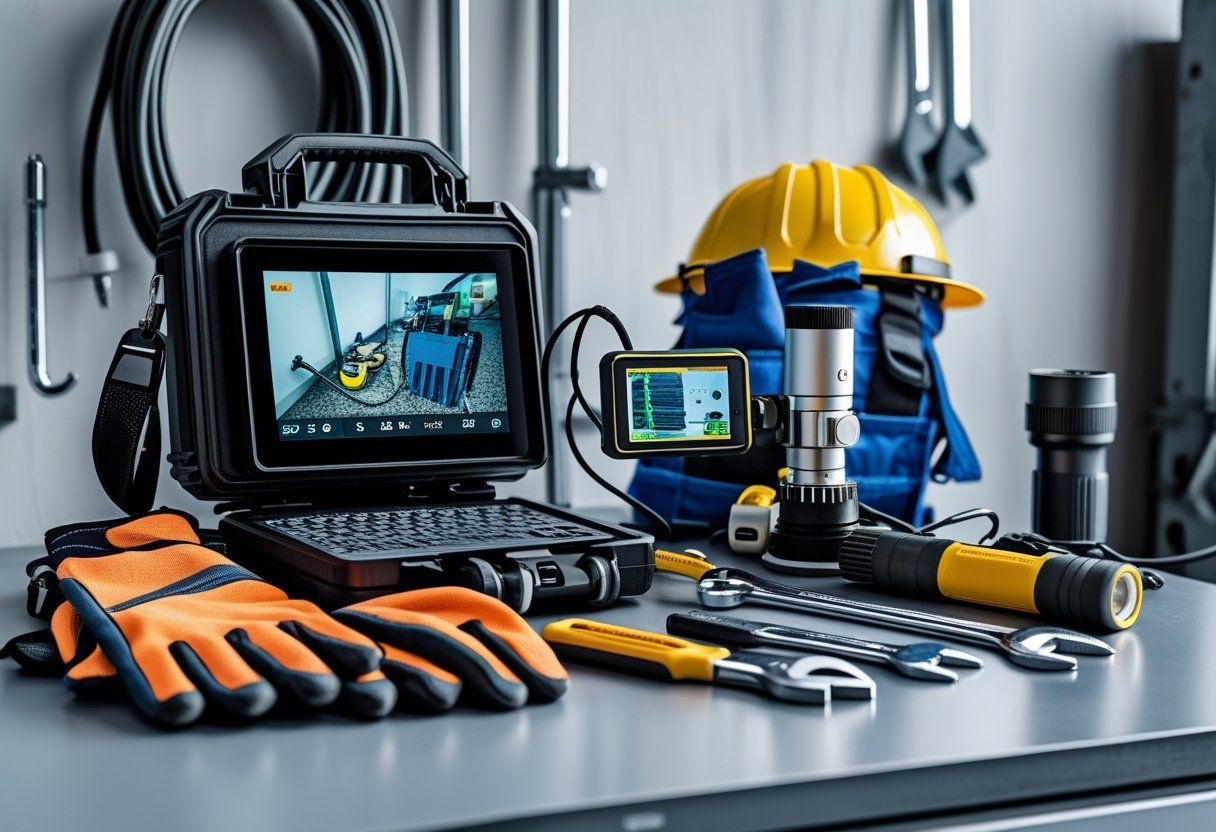
Tool kit with hard hat, gloves, laptop, and handheld device on a workbench in a workshop
By Stefani January 23, 2026
You want tools that give clear answers fast so you can find problems and fix them right. We rely on high-quality sewer cameras, locating gear, and cleaning tools to spot cracks, blockages, and defects in sewer lines accurately. Knowing which tools to use helps a plumber save time and avoid costly mistakes. We will walk […]
Worker in blue hard hat inspecting a manhole on a street with a camera device
By Stefani January 22, 2026
You want sewer line inspections timed so they catch problems before they get costly or urgent. We recommend scheduling inspections based on seasonal risks winter freeze, spring thaw, and heavy fall rains because timing cuts repair costs and prevents service interruptions. We will explain how weather, soil movement, and tree roots change the risk level […]
Common Mistakes to Avoid During Sewer Line Inspections
By Stefani January 18, 2026
We know sewer line inspections feel technical and tense, but avoiding a few common mistakes protects your home and wallet. Start by planning the inspection, knowing what to look for, and involving a qualified professional when signs point to trouble. That simple approach cuts down on missed problems and costly surprises. We will walk through […]
Show More