
Questions To Ask Before Hiring A Sewer Line Repair Company: Key Factors For Making The Right Choice

Stefani • November 10, 2025

Share this article

Hiring the right sewer line repair company can save us time, money, and stress. A broken or clogged sewer line can quickly turn into a serious problem, so knowing what to ask before signing a contract matters. The best way to choose a reliable company is to ask clear, direct questions about their experience, methods, and guarantees.

We need to understand who we’re trusting with our property and how they plan to handle the job. Asking about credentials, repair options, and project details helps us avoid hidden costs and poor workmanship. When we know what to look for, we can make confident decisions and protect our investment.

Key Questions to Ask About Experience and Credentials

We need to confirm that a sewer contractor has the proper qualifications, experience, and proof of past work before trusting them with a sewer line repair. Checking their license, insurance, and references helps us avoid costly mistakes and ensures the job meets local codes and safety standards.

Are You Licensed and Insured?

A valid license shows that a sewer contractor meets local and state requirements for sewer repair work. We should ask for their license number and verify it with the state licensing board. This confirms that they are authorized to perform sewer line repair and follow building codes.

Insurance is equally important. The contractor should carry both liability insurance and workers’ compensation. Liability insurance protects us if the contractor damages property during the repair. Workers’ compensation covers their employees if they get injured on the job.

If a contractor cannot provide proof of insurance, that is a serious warning sign. We can request a certificate of insurance directly from their insurance company to confirm coverage. Proper licensing and insurance protect both sides from legal and financial risk.

How Many Years Have You Been in Sewer Line Repair?

Experience matters in sewer repair because older systems and materials require different skills than modern installations. We should ask how long the company has specialized in sewer line repair, not just general plumbing.

A contractor with several years of experience will likely have handled various issues like root intrusion, pipe collapses, or line replacements. They know how to diagnose problems accurately and choose the right repair method.

We can also ask how many similar projects they complete each year. This helps us understand whether sewer repair is a main part of their business or a side service. Consistent experience often means they have refined their process and can finish work efficiently and safely.

Can You Provide References from Past Sewer Projects?

References give us a clear picture of the contractor’s reliability and quality of work. We should ask for at least three recent references from customers who had sewer line repair done.

When we contact these references, we can ask specific questions such as:

  • Was the project completed on time and within budget?
  • Did the crew communicate clearly and keep the area clean?
  • Have there been any recurring issues since the repair?

We can also look for online reviews or photos of past projects to confirm the contractor’s claims. Reliable sewer contractors are usually proud to share examples of completed work. Verifying references helps us choose a company that delivers consistent, professional results.

Questions on Repair Methods and Project Assessment

We need to understand how a company repairs sewer lines, what tools it uses, and how it evaluates the condition of the system. Knowing these details helps us judge the company’s skill, accuracy, and ability to handle complex sewer pipe problems safely and efficiently.

What Techniques and Equipment Do You Use for Sewer Line Repair?

We should ask about the exact repair methods and tools the company uses. Common techniques include pipe relining, pipe bursting, and spot repairs. Each method fits different types of damage. For example, relining works well for cracks, while bursting replaces old pipes entirely.

Modern companies often use hydro-jetting machines, video inspection cameras, and pipe locators. These tools help clean, inspect, and map the sewer lines before and after repairs.

It’s important to confirm that the company uses licensed equipment and follows local safety codes. We can also ask how they handle old pipe materials and whether they use eco-friendly disposal methods.

A quick comparison helps clarify:

Method Typical Use Equipment Needed
Pipe Relining Cracked or leaking pipes Epoxy resin, liner, curing tools
Pipe Bursting Full pipe replacement Bursting head, pulling machine
Spot Repair Small damaged sections Cutting and sealing tools

How Do You Diagnose Sewer Line Issues?

A reliable company uses several steps to find the cause of sewer line problems. We should ask if they perform a camera inspection first. This process sends a small camera through the pipe to locate breaks, blockages, or corrosion.

They may also use smoke testing or dye testing to find leaks. These tests show where water or gas escapes from the sewer pipes.

We should ask how they record and share their findings. Many companies provide digital inspection reports or video recordings so we can see the damage ourselves.

Accurate diagnosis prevents unnecessary digging and helps plan the right repair method. It also gives us a clear estimate of costs and project time.

Do You Offer Trenchless Sewer Repair Options?

Trenchless repair methods reduce digging and protect landscaping. We should ask if the company offers techniques like cured-in-place pipe (CIPP) lining or pipe bursting. These methods repair or replace sewer lines without large trenches.

CIPP involves inserting a resin-coated liner into the existing pipe, then curing it to form a new inner wall. Pipe bursting breaks the old pipe while pulling a new one into place.

These options often save time and lower restoration costs. However, they may not fit every situation. We should confirm if our sewer line’s material, depth, and damage level make trenchless repair possible.

Asking about warranties and expected lifespan helps us compare trenchless and traditional repairs more effectively.

Understanding Costs, Contracts, and Guarantees

We should know exactly what we are paying for, what the contract covers, and how the company stands behind its work. Clear estimates, written terms, and repair guarantees help us avoid surprise costs and protect us if sewer line problems return.

Can You Provide a Detailed, Written Estimate?

A written estimate helps us understand the full cost of sewer repair or sewer line replacement before work begins. It should list labor, materials, permits, and any possible extra charges. Without a written estimate, we risk unexpected fees once the job starts.

We should ask for a breakdown of costs, not a single total. For example:

Item Description Estimated Cost
Labor Crew time and equipment use $X
Materials Pipes, fittings, and sealants $X
Permits City or county approval fees $X

We should also confirm if the estimate covers cleanup after the work and whether it includes charges for diagnosing sewer backups. A company that refuses to give a written estimate may not be transparent about pricing.

What Is Included in Your Contract?

A clear contract protects both us and the company. It should describe the exact work being done, such as sewer repair, pipe replacement, or trenchless sewer line replacement. The contract should also include start and completion dates, payment terms, and any conditions that could change the price.

We need to check if the contract states who handles permits and inspections. It’s also important that it lists how the company will manage property damage, such as lawn or driveway repairs after digging.

Before signing, we should review all fine print. If something is unclear, we should ask for written clarification. An honest company will explain every part of the contract in simple terms.

Do You Offer Warranties or Guarantees on Sewer Repairs?

A warranty or guarantee gives us confidence that the sewer repairs will last. Most reliable companies offer coverage for parts and labor for a set time, often one to five years. This protection matters if sewer backups or leaks return after the job.

We should ask what the warranty covers and what voids it. For example, some warranties exclude damage from tree roots or heavy ground movement. Others may only apply if we schedule regular maintenance.

It helps to get the warranty details in writing, including the process for filing a claim. A company that explains its guarantee clearly shows that it stands behind its work and values customer trust.

Project Management and Customer Support

We manage sewer line repair projects with careful planning, clear communication, and reliable support. Our team focuses on scheduling, handling issues quickly, and staying available to customers after the work is complete.

How Do You Plan and Schedule Sewer Line Projects?

We start each project with a site inspection to assess the condition of the sewer line and identify the cause of damage. Using video inspection tools, we confirm the exact repair area and choose the best method-such as trenchless repair or pipe replacement.

After the assessment, we create a project schedule that includes start and end dates, material delivery times, and any required permits. We share this timeline with the property owner before work begins.

To keep the project on track, we use a simple checklist:

Step Task Responsible Party
1 Inspection and diagnosis Sewer contractor
2 Permit application Project manager
3 Repair scheduling Office team
4 Final testing and cleanup Field crew

We adjust the schedule if weather, access issues, or material delays occur, but we always inform the customer right away.

What Is Your Process for Handling Unexpected Issues?

Unexpected issues can include collapsed pipes, hidden blockages, or damaged utility lines. When this happens, we pause work and explain the situation to the customer. We provide photos or video footage so they understand the problem clearly.

We then review possible solutions, such as spot repair or full pipe replacement, and update the cost estimate. Our goal is to keep the project transparent and avoid surprises later.

We also coordinate with local utility companies if other underground lines are affected. This ensures repairs stay safe and compliant with city codes. Clear communication and quick decisions help us minimize delays and keep the project moving.

What Customer Support Do You Provide After the Repair?

After completing a sewer line repair, we perform a final inspection to confirm proper flow and sealing. We provide a written report and warranty details for the materials and workmanship.

If customers notice slow drains or odors after the repair, they can contact our support team. We schedule a follow-up inspection at no extra cost if the issue falls under warranty.

We also keep maintenance records on file, which helps us respond faster if future service is needed. Our goal is to ensure the repair lasts and that customers have easy access to help whenever they need it.

Recent Posts

Fast Response Plumbing technician servicing a water shut off valve in San Francisco
By Joe Tinsley July 17, 2026
Learn how gate valves, ball valves, and angle stops work, where to find them in your San Francisco home, and when to replace them. FAQs inside.
Budgeting for Unforeseen Sewer Line Maintenance Expenses
By Stefani January 31, 2026
Sewer line problems can hit your wallet fast, and we know the stress of a surprise repair. We show you how to plan a practical budget that covers emergency fixes, regular upkeep, and the big costs that sneak up on you. This saves you money and keeps small issues from turning into major failures. We […]
Seasonal Effects on Sewer Line Maintenance Costs
By Stefani January 30, 2026
You’ll want to know how seasons change what you pay for sewer line maintenance so you can plan ahead and avoid surprise bills. Seasonal weather, ground movement, and plant growth directly affect repair needs and costs, so budgeting by season cuts unexpected expenses. We outline what shifts costs, when repairs most often happen, and which […]
The Role of Location in Sewer Line Maintenance Pricing
By Stefani January 29, 2026
You’ll pay different amounts for sewer line maintenance depending on where your property sits and what’s under it. Location drives cost through factors like soil type, access difficulty, local labor rates, and permit rules, so knowing these lets you predict and plan for expenses. We’ll show how those local details shape quotes and outcomes. We’ll […]
Analyzing Material Expenses for Effective Sewer Line Care
By Stefani January 28, 2026
We’ll break down the real costs that matter for keeping a sewer line working well so you can plan and avoid surprises. You’ll learn which materials and fees drive most of the expense and how small choices can lower long-term costs. We’ll look at costs for parts, tools, permits, and regular cleaning, plus where labor […]
Understanding the Impact of Labor Costs on Sewer Line Maintenance
By Stefani January 25, 2026
You want to know how labor costs shape sewer line care and what that means for your wallet. We will show how wages, crew size, and the repair method you choose change the final bill so you can plan smarter and avoid surprises. Knowing which labor factors most drive costs lets you pick repair options […]
How to Interpret Sewer Line Inspection Reports
By Stefani January 24, 2026
You’ll get clear steps to decode the most important parts of a sewer line inspection report so you can act with confidence. We show you how to spot real problems, what each defect means, and which issues need immediate repair versus routine maintenance. We break the report into simple pieces what the camera images show, […]
Tool kit with hard hat, gloves, laptop, and handheld device on a workbench in a workshop
By Stefani January 23, 2026
You want tools that give clear answers fast so you can find problems and fix them right. We rely on high-quality sewer cameras, locating gear, and cleaning tools to spot cracks, blockages, and defects in sewer lines accurately. Knowing which tools to use helps a plumber save time and avoid costly mistakes. We will walk […]
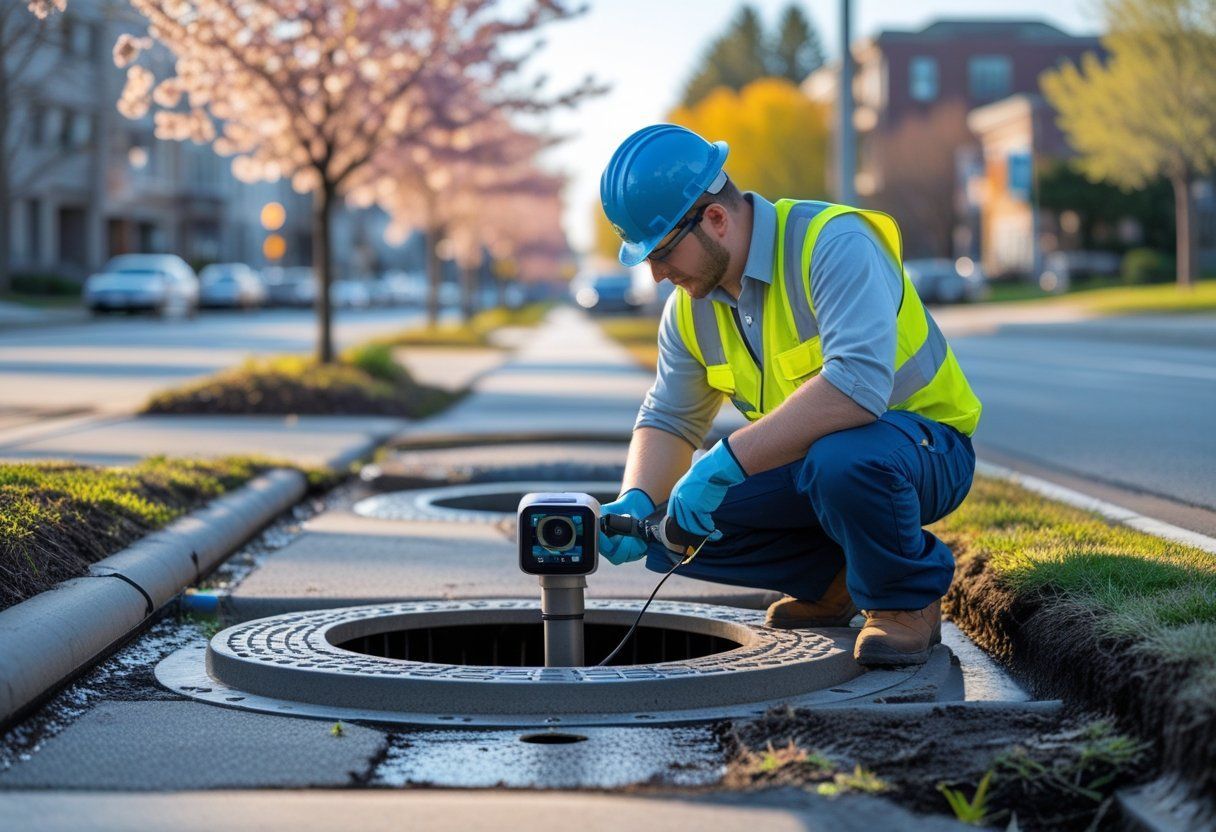
Worker in blue hard hat inspecting a manhole on a street with a camera device
By Stefani January 22, 2026
You want sewer line inspections timed so they catch problems before they get costly or urgent. We recommend scheduling inspections based on seasonal risks winter freeze, spring thaw, and heavy fall rains because timing cuts repair costs and prevents service interruptions. We will explain how weather, soil movement, and tree roots change the risk level […]
Common Mistakes to Avoid During Sewer Line Inspections
By Stefani January 18, 2026
We know sewer line inspections feel technical and tense, but avoiding a few common mistakes protects your home and wallet. Start by planning the inspection, knowing what to look for, and involving a qualified professional when signs point to trouble. That simple approach cuts down on missed problems and costly surprises. We will walk through […]
Show More