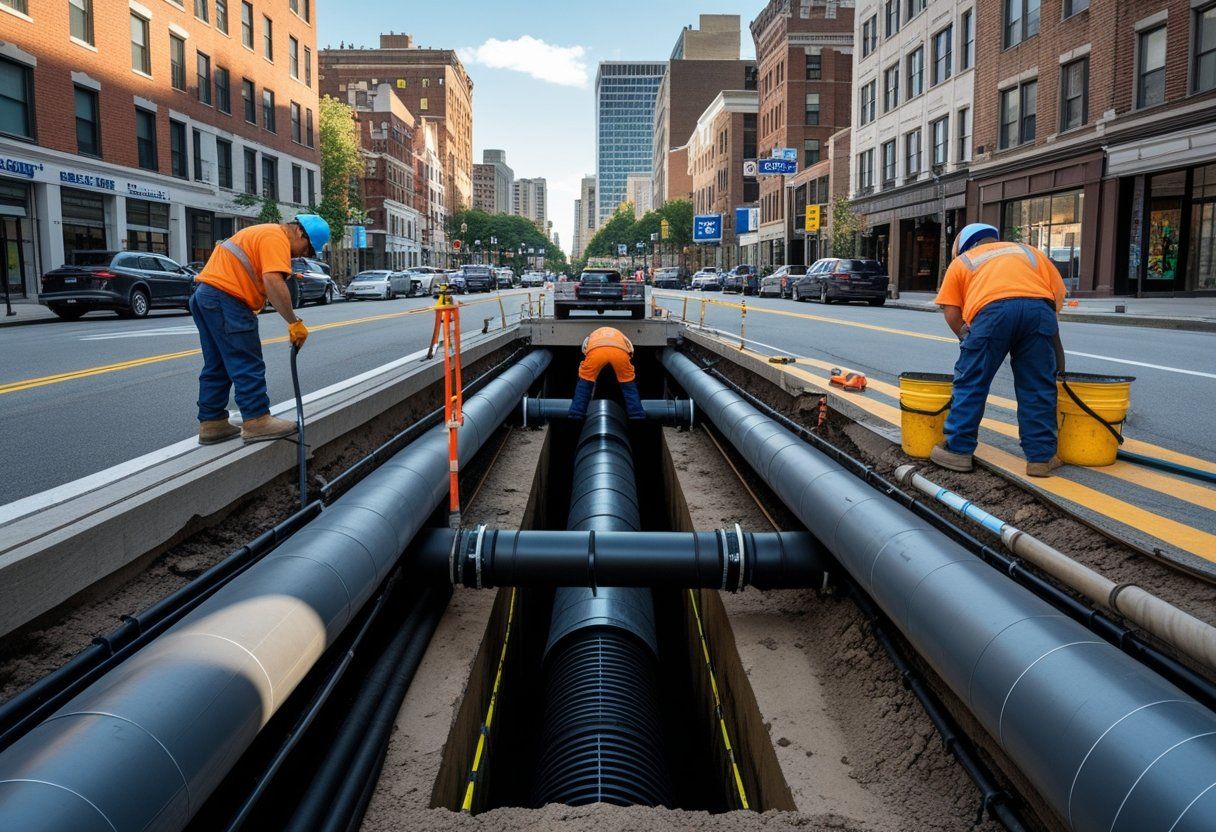
Grease clogs sewer lines by sticking to pipe walls and trapping debris, which slows flow and leads to backups. We can prevent most sewer problems by keeping fats, oils, and grease out of drains and by spotting blockages early.

We will explain how grease builds up, where it comes from, and how to stop it from causing damage. You will learn simple actions we can take at home and what professionals do to clear and repair lines so small habits don’t turn into big repairs.
How Grease Impacts Sewer Line Health
We describe how grease forms in pipes, what damage it causes, and which conditions make it worse. This helps readers spot problems and take action before a sewer backup or overflow.
The Formation of Grease Buildup
Grease from kitchens and food businesses enters the sewer as warm, soft fats and oils. As the liquid cools in the pipe, grease sticks to the pipe walls and mixes with soap, food bits, and wet wipes.
Over time, layers of this sticky material harden into a thick coating we call hardened grease or FOG (fats, oils, grease). Hardened grease narrows the pipe’s flow area and roughens the inside surface.
We often see early signs as slow drains and frequent clogs in sinks and floor drains. In municipal lines, many small deposits combine into large grease clogs that trap more debris and cause sewer overflows if not removed.
Consequences of Grease-Related Blockages
Grease clogs reduce pipe capacity and slow wastewater flow, leading to slow drains in homes and businesses. When flow slows, solids settle and create larger obstructions that cause sewage backups into buildings and onto streets.
A full blockage can cause sanitary sewer overflows and sewer overflows in public areas, posing health risks and property damage. Emergency pump-outs and pipe repairs become costly for homeowners and utilities.
We also see fatbergs massive, hardened grease formations mixed with wet wipes forming in main sewer lines. These require mechanical removal and can force temporary shutdowns of sewer segments during cleanup.
Factors Influencing Grease Accumulation
Temperature matters: warm grease travels farther, but it solidifies as it meets cool pipe walls. High-flow events can push grease downstream where it later hardens into larger deposits.
Behavioral factors matter too: pouring grease down drains, using ineffective grease traps, and flushing wipes increase accumulation. Commercial kitchens that lack proper grease management create concentrated loads that overwhelm sewer lines.
Pipe condition affects buildup as well. Older, rough, or cracked pipes catch grease more easily. We also note that seasonal changes and heavy rain can change flow patterns, sometimes dislodging grease or, conversely, compacting deposits and triggering sewer overflows.
Key prevention points:
- Never pour cooking oil or grease down drains.
- Use grease traps and maintain them regularly.
- Avoid flushing wipes and non-biodegradable items.
Sources and Prevention of Grease in Sewer Systems
We identify where grease comes from and how to stop it before it reaches pipes. The following subsections explain common sources, correct disposal steps, and how grease traps and interceptors protect sewers.
Common Residential and Commercial Sources
In homes, most grease comes from cooking oils, butter, and pan drippings that go down kitchen sinks. Food scraps and plate rinsing without sink strainers push fats into drain lines. Fog from aerosol cooking sprays can also leave thin grease films on surfaces that wash into drains.
In restaurants and commercial kitchens, large volumes of lard, deep-fryer oil, and food waste are the primary causes. Dishwashing stations and floor drains often carry emulsified grease. Catering trucks and food courts add periodic high loads. These concentrated sources create faster buildup than typical household flows.
Proper Grease Disposal Practices
We recommend pouring cooled cooking oil into sealed containers like jars or milk cartons and placing them in trash, not down the sink. For small amounts, wipe pans and plates with paper towels before washing; discard the towels in the garbage.
Use sink strainers to catch solids and avoid rinsing plates into drains. For businesses, contract with licensed waste haulers for used fryer oil recycling. Label disposal areas and train staff on proper grease disposal and source control to reduce accidental dumping.
Role of Grease Traps and Interceptors
Grease traps take grease out of wastewater at the source, usually under sinks or in kitchen lines. Grease interceptors are larger, often outside or underground, and handle flows from multiple fixtures. Both slow water so fats float and solids settle.
We keep traps effective with regular grease trap maintenance: skim grease every 1-4 weeks depending on use, and pump interceptors on a schedule set by flow and local codes. Record maintenance and keep access clear. Proper sizing and timely cleaning prevent overflows and reduce sewer blockages.
Detection and Removal of Grease Blockages

We focus on spotting grease clogs early, choosing the right cleaning method, and weighing hydro-jetting against drain snakes so you can protect sewer lines and avoid repeated problems.
Identifying Grease-Related Sewer Issues
We watch for slow drains, gurgling toilets, and foul odors near sinks or floor drains. Grease clogs often cause backups in multiple fixtures at once, especially after cooking or washing greasy pots.
A visual inspection of cleanouts or a camera inspection of the sewer line confirms soft, greasy buildup or hardened congealed rings. Cameras also show pipe offsetting or roots that trap grease.
Check for repeat clogs after temporary fixes; recurring blockages signal a larger grease deposit deeper in the sewer. Keep records of incident timing and what was poured down the drain to help professionals target the problem.
DIY and Professional Cleaning Methods
For minor grease clogs, we start with mechanical snaking or enzyme-based cleaners designed to break down fats. Use a hand auger or closet auger for local traps, not the main sewer line. Avoid chemical caustics that can harm pipes and sewage systems.
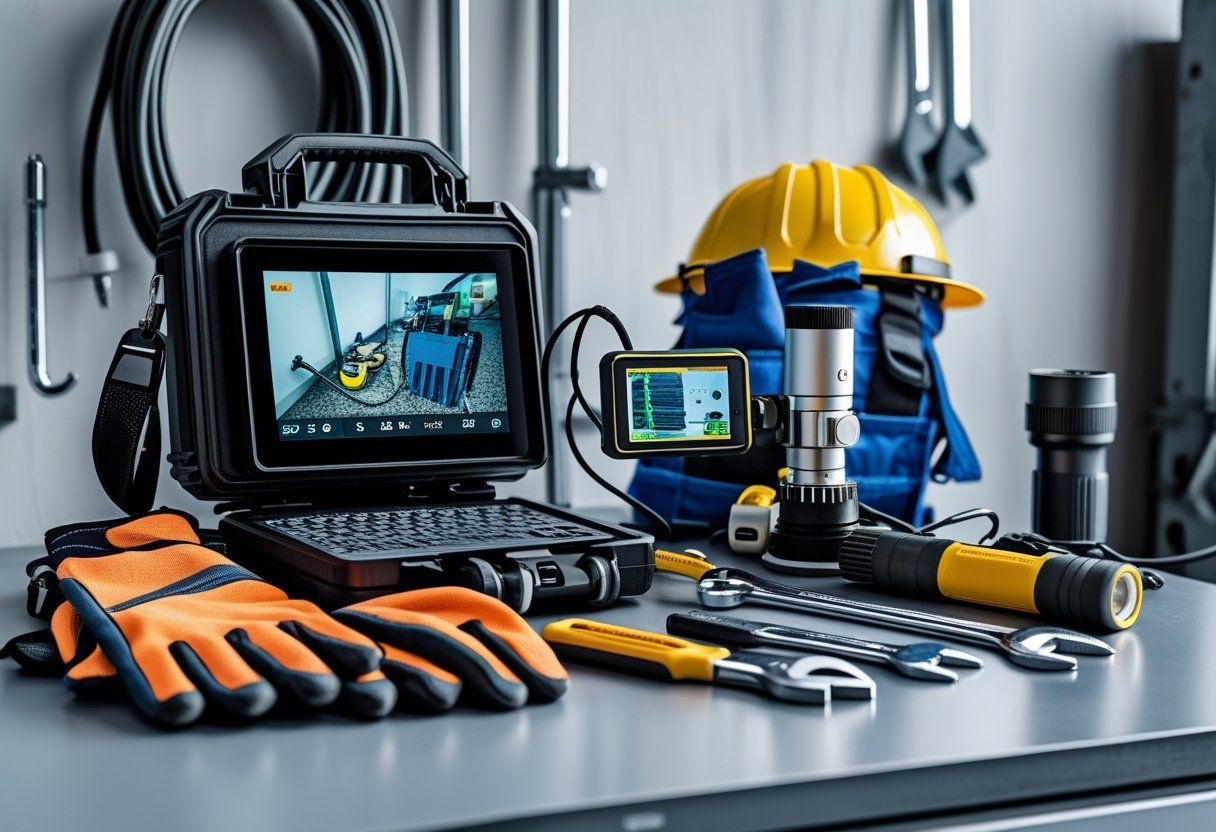
When clogs persist or backup risks rise, we call for professional drain cleaning. Professionals use inspection cameras, motorized snakes, and high-pressure equipment safely. They can also inspect for pipe damage and recommend follow-up maintenance like grease traps for commercial kitchens.
Documenting what works helps us choose long-term solutions and prevents costly repeat visits.
Comparing Hydro-Jetting and Drain Snakes
Hydro-jetting uses water at high pressure to scour grease from pipe walls. It removes hardened grease clogs and biofilm along long sewer sections, often restoring full flow. Trained technicians control pressure to protect older or damaged pipes.
Drain snakes (motorized or hand augers) cut through or pull out blockages one section at a time. They work well for roots and dense single-location clogs but often leave greasy residue on pipe walls. We prefer snakes for small, localized blockages and hydro-jetting for heavy, widespread grease buildup.
Choose hydro-jetting when camera inspection shows thick grease rings or repeated clogs. Choose a drain snake for quick access points or when pipes are fragile and cannot handle high pressure.
Wider Impacts and Long-Term Solutions
Grease in sewer lines harms water, public health, and infrastructure. We must reduce grease at the source and invest in systems that stop blockages and overflows.
Environmental and Public Health Protection
Grease forms fatbergs that trap trash and reduce flow. When sewers back up or overflow, untreated wastewater reaches rivers and streets. That water can carry bacteria, viruses, and chemicals that endanger swimmers, fish, and drinking-water sources.
We can limit that risk by enforcing grease disposal rules for restaurants and by expanding grease trap installation and maintenance. Regular cleaning schedules and targeted inspections catch buildup before it causes overflows.
We should also use monitoring sensors in high-risk lines to detect slow flow or rising levels early. These sensors let us act before raw sewage reaches the environment.
Infrastructure Longevity and Costs
Grease speeds pipe corrosion and forces more frequent repairs. Blockages raise cleaning and emergency-response costs and shorten pipe life, raising replacement costs for utilities and taxpayers.
We can extend pipe life by combining strong prevention with scheduled mechanical cleaning and lining technologies. Chemical or enzymatic treatments can reduce buildup in older lines when used carefully.
Prioritizing high-flow and older sections for upgrades saves money long term. Investing in grease education for food businesses and households lowers routine maintenance needs and reduces sewer overflow incidents.