You want tools that give clear answers fast so you can find problems and fix them right. We rely on high-quality sewer cameras, locating gear, and cleaning tools to spot cracks, blockages, and defects in sewer lines accurately. Knowing which tools to use helps a plumber save time and avoid costly mistakes.
We will walk through the must-have equipment, the types of sewer cameras and inspection tech, the advanced diagnostic and cleaning gear, and the safety practices that keep inspections accurate and safe. This guide makes it easier for us to pick the right gear for each job and get reliable results every time.
Essential Sewer Line Inspection Tools
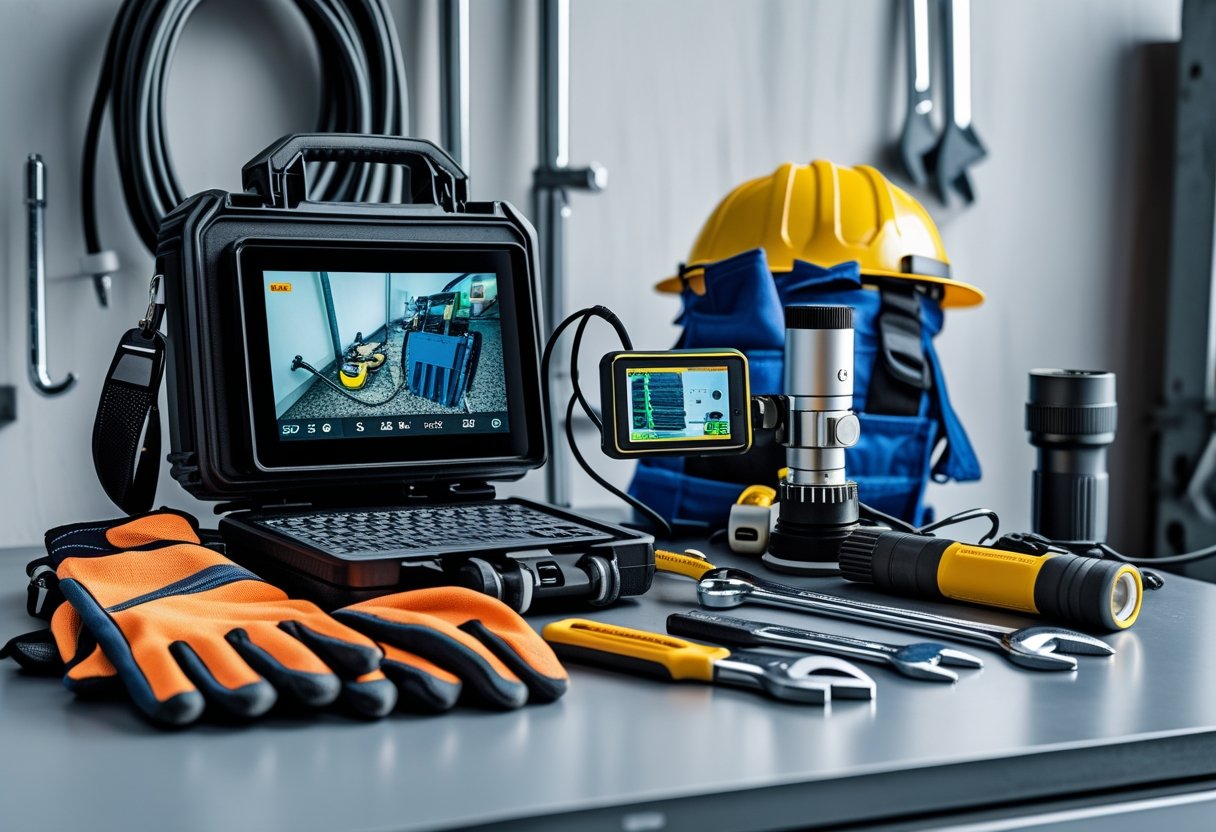
We focus on tools that give clear visual data, accurate location, and safe access. These items let us find blockages, breaks, and pipe conditions fast and with confidence.
Video Inspection Cameras and Systems
We rely on a sewer camera that records real-time video and saves high-resolution clips. A push rod camera suits 1.5-6 inch laterals, while a crawler camera works for larger mains and long runs. Key features include LED lighting, adjustable white balance, and a tilt/rotate head for full-pipe views.
A rugged monitor and recorder let us review footage on site and deliver files to clients. Cameras with detachable reels or modular heads simplify repairs and cleaning. Battery life, waterproof ratings (IP68), and compatibility with reporting software matter most for daily inspections.
We choose systems with flexible push rods in lengths from 100 to 300 feet depending on job size. Integrated sonde support or an external sonde transmitter lets us pair video with precise location data for mapping and repair planning.
Pipe Locators and Sonde Transmitters
We use pipe locators to find the exact position and depth of a camera or sonde transmitter. A sonde transmitter mounts in the camera head or is pushed separately; it emits a signal the locator reads above ground. Accurate depth readings help us avoid damaging utilities during excavation.
High-frequency sondes work well in short runs and congested areas. Lower frequencies travel further but need more power. We check locator calibration, mode settings, and battery levels before each job to avoid false readings.
Combination locator kits include yokes, clamps, and headphone outputs for noisy sites. We mark coordinates on site plans and export data to GIS or repair tickets. Reliable locators reduce guesswork and speed up targeted digs.
Manhole Hook and Access Equipment
We carry a manhole hook set and safety gear to access and secure manhole covers safely. Long-handled hooks and lifting keys reduce strain and prevent pinch injuries. We always use gloves, safety boots, and eye protection when handling heavy covers.
Access equipment includes tripod or davit systems for confined-space entry and gas monitors to check oxygen and toxic gas levels. For large inspections, we bring a portable ramp or step system to move gear into the manhole opening.
Proper lifting tools and secure access reduce damage to covers and speed up entry. We train staff on correct techniques and inspect hooks and slings for wear before every use.
Types of Sewer Cameras and Inspection Technologies
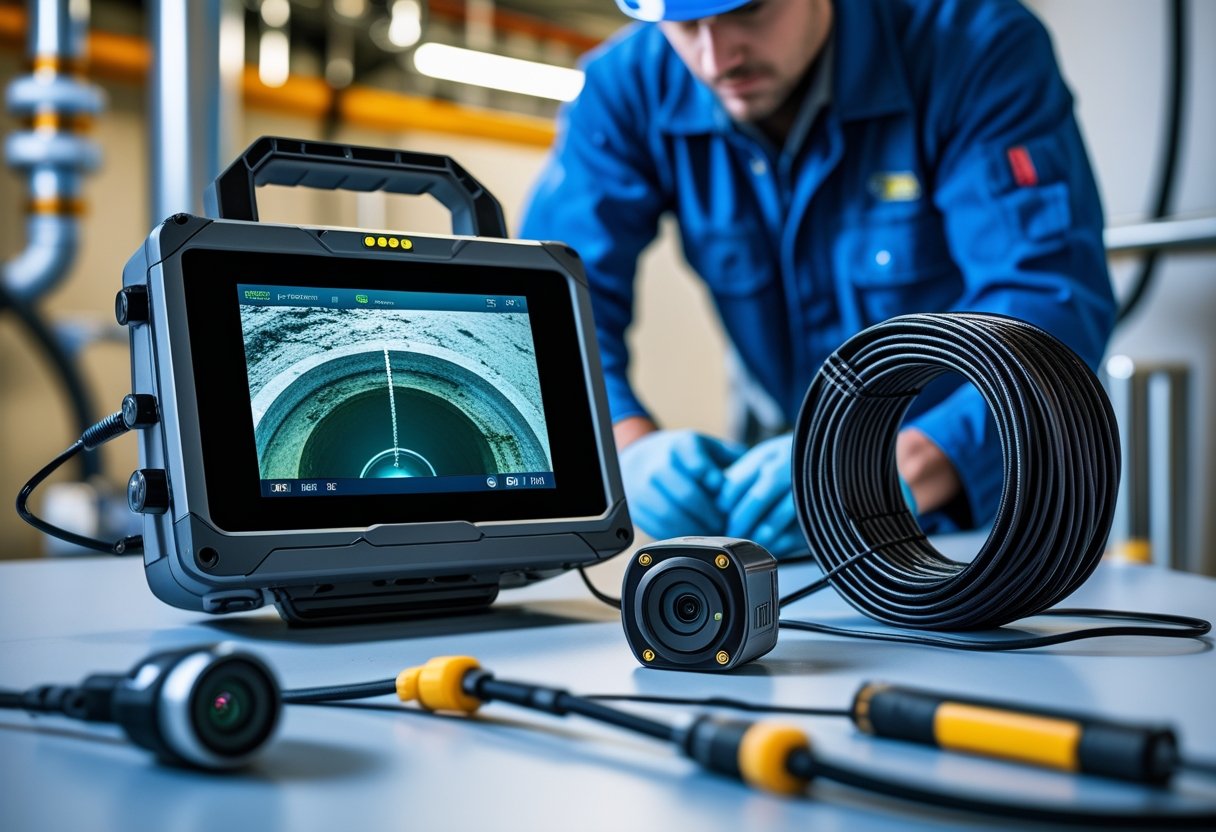
We focus on camera types that fit common jobs: tight residential lines, large mains, and specialty situations. Each option balances size, image quality, durability, and ease of use.
Push Rod Cameras for Residential Lines
Push rod cameras (also called push cameras or push rod systems) work well in 1.5-6 inch residential pipes. We feed a flexible rod with a waterproof camera head into the pipe. The rod bends around orangepeel turns and short offsets, letting us inspect kitchen, bathroom, and property lateral lines.
Most push rod cameras use high-resolution cameras and LED lighting to show clear detail of cracks, roots, and blockages. We often choose units with sonde transmitters so we can locate the camera head aboveground. Lightweight reels and portable monitors let us work in yards and crawlspaces without heavy gear.
We check for IP68 waterproofing and reinforced fiberglass or Kevlar rods when buying. Controls for pan/tilt or adjustable lighting improve defect identification. For routine home inspections, push rod systems give fast, low-cost results with reliable video inspection.
Crawler Cameras for Large Diameter Pipes
Crawler cameras suit pipes from about 6 inches to several feet in diameter. We place a self-propelled crawler with tracks and a high-resolution camera into the flow or on a flotation sled. The crawler handles long runs, heavy silt, and steep grades that push rods cannot manage.
These video inspection cameras often include tilt/pan, zoom optics, and bright LED arrays for crisp images at distance. Many models are sealed to IP68 or higher and carry powerful batteries for multi-hour runs. We use sonde location and tethered fiber or winch systems for precise position and retrieval.
Crawlers add telemetry for distance and inclination readings. We pick rugged frames, easily replaceable wheels, and remotes with recordable displays when surveying municipal mains or industrial drains.
Rigid Scopes and Specialized Cameras
Rigid scopes and specialized cameras cover short, straight runs and unique tasks. Rigid scopes (rigid scopes) use a fixed-length rod with a high-resolution camera at the tip for exact measurements in manholes, lateral connections, or lift station inspections. They give very stable images and accurate alignment readings.
Specialized cameras include pan/tilt/zoom inspection heads, inline flow cameras, and small-bore micro cameras for sub-inch lines. We select waterproof camera heads rated for continuous immersion and sensor packages tuned for low-light sewer conditions. Accessories like laser measurement units and removable sonde modules extend capability.
For contracts requiring detailed defect coding or pipe profiling, these tools give the precision we need in confined or specialized spaces.
Advanced Diagnostic and Cleaning Equipment
We focus on tools that let us see blockages, remove heavy buildup, and fix pipes with minimal digging. These tools include high-pressure cleaning gear, noninvasive leak-detection methods, and trenchless repair systems.
Hydro-Jetting Systems
Hydro-jetting uses high-pressure water (1,500-4,000 psi for most sewer lines) to blast roots, grease, and mineral scale out of pipes. We choose nozzles that match pipe diameter and material to avoid damage while keeping enough pressure to cut through tough obstructions.
Key components:
- Pump and hose rated for required psi and flow (gpm).
- Rotating nozzle for scouring action.
- Hose reel and remote controls for safe operation.
We follow safety steps: start at lower pressure, inspect lines with a camera afterward, and never use hydro-jetting on severely collapsed lines. Hydro-jetting excels at restoring flow in main lines and removing congealed grease.
Smoke and Dye Testing Tools
Smoke testing forces non-toxic smoke into a sanitary or storm line to reveal leaks, illegal connections, and roof or yard penetrations. Dye testing injects colored liquid into fixtures or roof drains to confirm flow paths and cross-connections.
What we use:
- Smoke machines with adjustable output and filters.
- Colored dyes that are visible in daylight or under ultraviolet light.
- Handheld cameras and tracer logs to record where smoke or dye exits.
We conduct tests when flow is low and vents are clear. Smoke testing finds roof vent leaks, cracked joints, or broken cleanouts. Dye testing pinpoints where a specific fixture ties into the sewer, helping us decide on targeted repairs.
Pipe Repair and Trenchless Solutions
Trenchless methods repair pipes with minimal digging. We rely on cured-in-place pipe (CIPP) liners, pipe bursting for full replacement, and point-repair inserts for small defects.
Common tools and materials:
- CIPP inversion or pull-in-place liners with resin and curing equipment.
- Pipe bursting kits with hydraulic heads and new pipe sections.
- Local spot-repair sleeves for small cracks and offset joints.
Trenchless work requires precise pre-inspection with CCTV to size the problem and locate service connections. We avoid trenchless methods for severely collapsed lines unless we can first excavate and stabilize the collapse. Trenchless repair saves time and landscaping when conditions allow.
Safety and Best Practices for Accurate Inspections
We focus on protecting people and tools while finding common sewer line problems quickly and clearly. Proper gear, safe work steps, and knowing signs like root intrusion or grease buildup make inspections both accurate and repeatable.
Personal Protective Equipment and Compliance
We always wear PPE that matches the job and local rules. Required items include N95 or P100 respirators for vapor and dust, chemical-resistant gloves (nitrile or neoprene) for contact with sewage, eye protection, and steel-toe boots with puncture resistance. High-visibility vests help when working near roads or heavy equipment.
We use confined-space monitors for oxygen, H2S, and methane before entry. Lockout/tagout controls any powered pumps. We maintain written permits and logs for confined-space work to meet OSHA or local safety standards. Regular PPE inspection and cleaning prevents equipment failure and cross-contamination.
We follow safe cable and reel handling to avoid trips and crush injuries. We secure tripods and retrieval lines when accessing manholes. We inspect and test cameras, sonde batteries, and lights before each job to ensure equipment works under wet and corrosive conditions.
Common Issues Detected During Inspections
We look for blockages, root intrusion, grease buildup, cracks, offset joints, and collapsed pipes. Cameras help us pinpoint the blockage location and measure distance from a manhole or cleanout using sondes and distance counters. This saves time during sewer repair.
We note tree root intrusion patterns roots usually enter at joints or cracks and cause recurring clogs. Grease buildup often appears as smooth, thick coatings that reduce flow and lead to backups. We document defect type, severity, and GPS or distance markers for repair crews.
We record pipe material, diameter, slope, and any signs of corrosion or deformation. We flag urgent issues such as full collapses or severe offsets for immediate repair. Our reports include images, time stamps, and clear recommendations: cleaning, root cutting, relining, or full replacement.