
Your plumbing needs solved on the first visit.
Fast Response Plumbing & Rooter is a full-service residential plumbing team serving San Francisco.
★★★★★ 4.9 · 1,500 Reviews
✓ Open 7 days a week
✓ Licensed, bonded & insured
Request a free estimate
Please fill out the form below and we'll respond ASAP.
Contact Us
We will get back to you as soon as possible.
Please try again later.
Request your free estimate
Please fill out the form below and we'll respond ASAP.
Contact Us
We will get back to you as soon as possible.
Please try again later.
For Emergency Service during business hours, please call 415-596-6115
CSLB #1024971
•
C-36 Licensed
•
Backflow Certified
•
Bonded & Insured
•
Over 25 Years Serving SF
•
Family Owned & Operated
TESTIMONIALS
4.9
★★★★★
Over 1,500 Reviews on Yelp & Google


★ ★ ★ ★ ★
"I called Fast Response Plumbing to replace a P trap of the sink bathroom. The response and the scheduling was fast. The plumber arrived on the same day during the 2 hours window and quickly took care of the issue. Great service!"
— Marie-Helene Dziesietnik
★ ★ ★ ★ ★
"Fast Response Plumbing is indeed fast! I needed a new kitchen faucet installed and they were in and out in less than a half hour. New faucet works perfectly. Highly recommend!"
— Ronald Collins
★ ★ ★ ★ ★
"Response was indeed fast. A repairman arrived quickly, obtained a new part, and installed it — all within a few hours. I didn't have to spend my weekend without my kitchen sink."
— Henry B.
★ ★ ★ ★ ★
"Billy arrived within the time window, spotted the cause quickly, worked fast, and updated me along the way — at a reasonable price that included a full inspection."
— Kristi E.
★ ★ ★ ★ ★
"Tim was patient explaining the roots in my clogged sewer pipe, showed me time-stamped camera photos, and laid out a clear, permanent fix. Joe kept the cost reasonable."
— Mrs. K. Jue
★ ★ ★ ★ ★
"Good communication, on time, thorough — and they CLEANED UP AFTER THEMSELVES. 💖"
— Gaetani
★ ★ ★ ★ ★
"From first contact to scheduling to completion: two and a half hours. As the name implies. Jarvin and his partner were professional and knowledgeable."
— Hoan B.
★ ★ ★ ★ ★
"Had a great experience with these guys. They were quick to respond when I reached out in the evening to schedule and came out the next morning. Esvin showed up on time, fixed the problem and even did a pretty thorough clean up job. Fair prices and good service!"
— Courtney Tawadrous
★ ★ ★ ★ ★
"The best in town. They've snaked drains, replaced hot water heaters, and other stuff too. Fair prices and fast service! Thanks Tim!"
— James Murphey
★ ★ ★ ★ ★
"Fast. Quick efficient response. I appreciate the professional service for snaking our storm drain line. My first call for help with my plumbing issues."
— Erica Kodiyan
★ ★ ★ ★ ★
"Fast Response did a great job on our sewage pipe replacement. Their expertise made a big job seemed easy and hassle free, everything went smoothly and timely. Jarvin and Kevin were very thorough and patient when detailing the work and answering our questions from the beginning. The job was completed exactly as stated."
— Betsy Sun
★ ★ ★ ★ ★
"I called Fast Response Plumbing to replace a P trap of the sink bathroom. The response and the scheduling was fast. The plumber arrived on the same day during the 2 hours window and quickly took care of the issue. Great service!"
— Marie-Helene Dziesietnik
★ ★ ★ ★ ★
"Fast Response Plumbing is indeed fast! I needed a new kitchen faucet installed and they were in and out in less than a half hour. New faucet works perfectly. Highly recommend!"
— Ronald Collins
THE FAST RESPONSE DIFFERENCE
Fast Response Plumbing & Rooter
✓
Talk to the team — anytime
We're owner-operated, with many of our experienced team members serving our customers for decades.
⚡
Your day, back on track fast
Same-day or next-day service, seven days a week. Break something on a Saturday morning? You don't need to wait until Monday to be able to use your kitchen again.
$
Know the price before we start
Free in-person estimates and per-job quotes. No hourly surprises and no pressure sales tactics.
OUR SERVICES
We'll get it working again
From a dripping faucet to a century-old sewer line, here's how we get your home back to normal. For houses, apartments, and HOAs across San Francisco.
Plumbing Repair & Replacement
Fixtures, water and gas lines, shut-off valves, appliance hook-ups, and remodels.
Learn more →
Drain Cleaning
Slow or backed-up drains flowing freely again — fast — with the right tool for the clog, from snakes to jetters.
Learn more →
Hydro Jetting
Our clients' toughest blockages cleared and kept clear, with high-pressure cleaning.
Learn more →
Water Heaters
Repair or replacement for tanked, tankless, electric, and hybrid heat-pump heaters.
Learn more →
Sewer Line Service
From backup to camera-checked and clear with a lasting fix for the aging pipes under SF homes.
Learn more →
Leak Detection
We will identify and address a hidden water or gas leak before more damage is done.
Learn more →
Most fixes are done on the first visit
We get your home working again, whether it's getting the water running, the drain flowing or the heat back.
WHO WE SERVE
Plumbing for SF homes
Most of our work is residential for homeowners, HOAs, and property managers.



MEET THE OWNER
San Francisco Roots
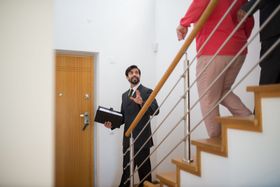
Joe Tinsley has spent nearly 25 years keeping San Francisco's plumbing running. A dedicated father of three, he runs Fast Response as a true family business — his wife, Stefani, manages the back office team, while Joe and our stable team of eight experienced plumbers handle the work.
So when you call, you reach people who treat your home the way they'd want theirs treated. You'll likely meet one of them — Billy, CJ, David, Esvin, Jarvin, Tim, or Yefrin — right at your free estimate.
Joe Tinsley
Owner & CEO · C-36 Licensed · Backflow Certified
PLUMBING SERVICES ON YOUR SCHEDULE
How the process works
1
Our team helps you book
Our office team books your free in-person estimate for usually same or next day.
2
You get a heads-up text
A reminder lets you know your technician is on the way to your property.
3
You hear the price first
Your tech explains the problem, your options, and a per-job price before starting.
4
It's fixed and tidy
We complete the work on the spot when we can, and always clean up after ourselves before we go.
RIGHT IN YOUR NEIGHBORHOOD
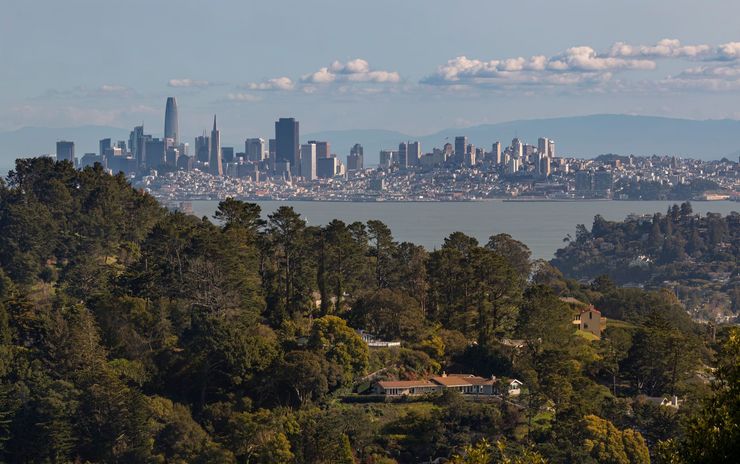
Serving San Francisco and surrounding areas
Based in the Richmond District on Geary Blvd, we know your block — the old pipes, the steep streets, the row houses. We cover the whole city, plus the northern peninsula and Marin.
Richmond
Sunset
Pacific Heights
Marina
Noe Valley
Bernal Heights
The Mission
SoMa
West Portal
Bayview
Also serving the north Peninsula including South San Francisco, Daly City, Brisbane, Colma, Pacifica, San Bruno, and Millbrae.
