Roots in sewer lines cause clogs, slow drains, and costly damage if you ignore them. We can spot the signs early, inspect the pipe with a camera, and fix or prevent root intrusions before they get worse.
We’ll show how to recognize common warning signs, use simple and reliable diagnostic steps, and compare repair and prevention options so you can choose what works for your home.
Follow our clear, practical steps and you’ll save time, avoid repeat problems, and keep your sewer lines flowing properly.
Understanding Sewer Line Root Intrusion
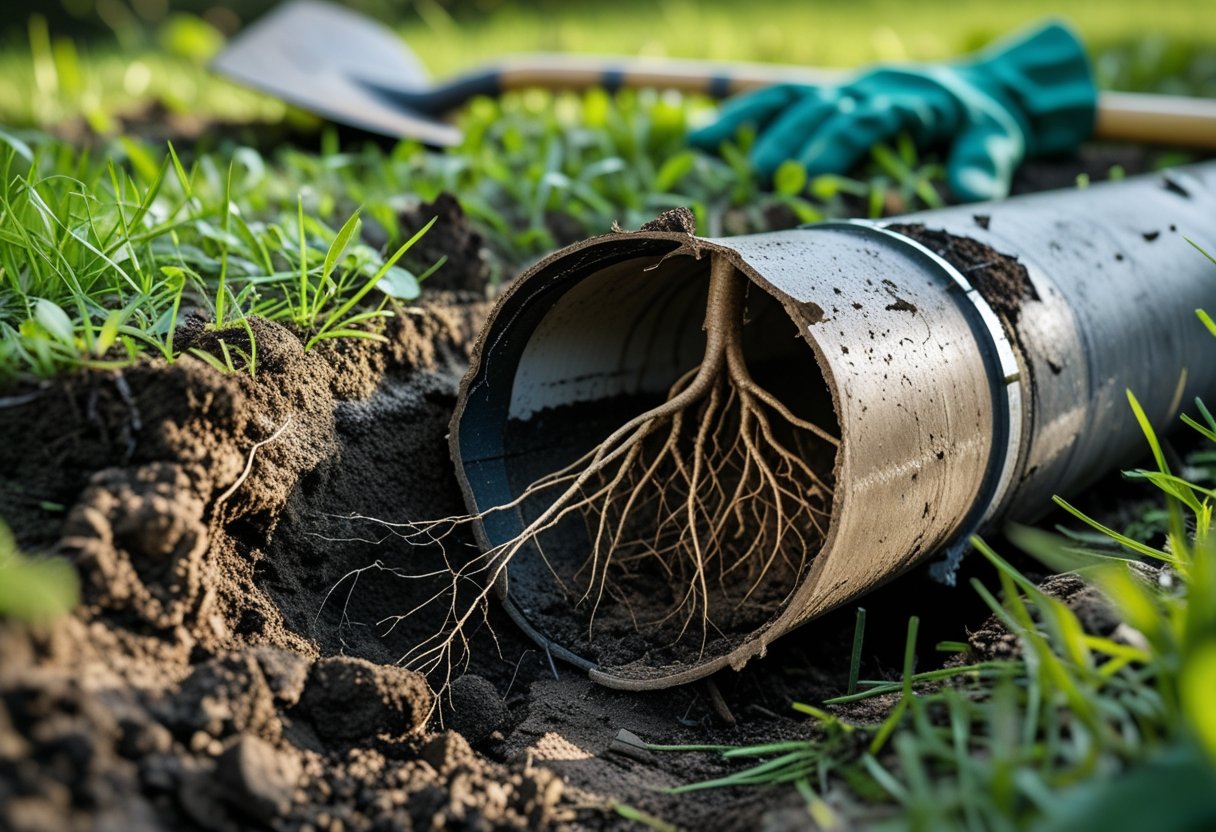
We explain how tree roots find and damage sewer pipes, why older systems fail first, and which pipe materials are most at risk. Read specifics on root behavior, typical failure points, and common pipe types that need attention.
What Is Root Intrusion?
Root intrusion happens when plant roots grow into sewer pipes to reach water and nutrients. Roots first sense moisture through small cracks, joints, or gaps in the pipe bedding. Once inside, roots expand and form dense mats that block flow.
We see three main stages: initial invasion through small openings, interior growth that narrows the pipe, and long-term entanglement that leads to backups. Root infiltration can cause slow drains, gurgling toilets, and wet patches over the yard where sewage leaks. Early detection prevents major repair costs.
How Tree Roots Invade Sewer Pipes
Roots follow moisture and soil nutrients. Fine root tips probe tiny cracks and offsets at pipe joints. Roots exploit flexible joint failures in older installations and soil settlement around the pipe.
As roots grow thicker, they wedge open joints and pull in more soil, widening damage. Roots also trap solids inside the pipe and create blockages that force sewage to back up. We often find root masses lodged at bends, junctions, and near lateral connections to the house.
Why Older Sewer Systems Are Vulnerable
Older systems used methods and materials that degrade over time. Pipes installed decades ago often shifted from soil settling, freeze–thaw cycles, and corrosion. Those movements open joints and hairline cracks that roots exploit.
Systems with shallow burial depth or poor backfill are more likely to have joint separation. Long service life increases corrosion in metal pipes, making holes and pits that invite root intrusion. We prioritize inspecting systems over 30–40 years old or ones with chronic blockages.
Common Pipe Materials at Risk
Clay pipes: Common in older neighborhoods, clay resists corrosion but has brittle joints that crack or separate. Roots invade these joints and break fragments, increasing collapse risk.
Cast iron pipes: Cast iron sewer pipes corrode from the inside, forming pits and holes. Corrosion weakens joints and makes it easier for roots to penetrate. Cast iron can remain structurally sound for decades, but once compromised, roots accelerate failure.
PVC and modern plastics: These materials have fewer joint leaks and smoother interiors, so roots are less likely to invade. However, poor installation or damaged sections can still allow root infiltration.
We often find the worst root intrusion in clay and corroded cast iron systems, where root masses lead to partial collapse or repeated sewer line damage.
Key Signs and Early Detection of Root Intrusion
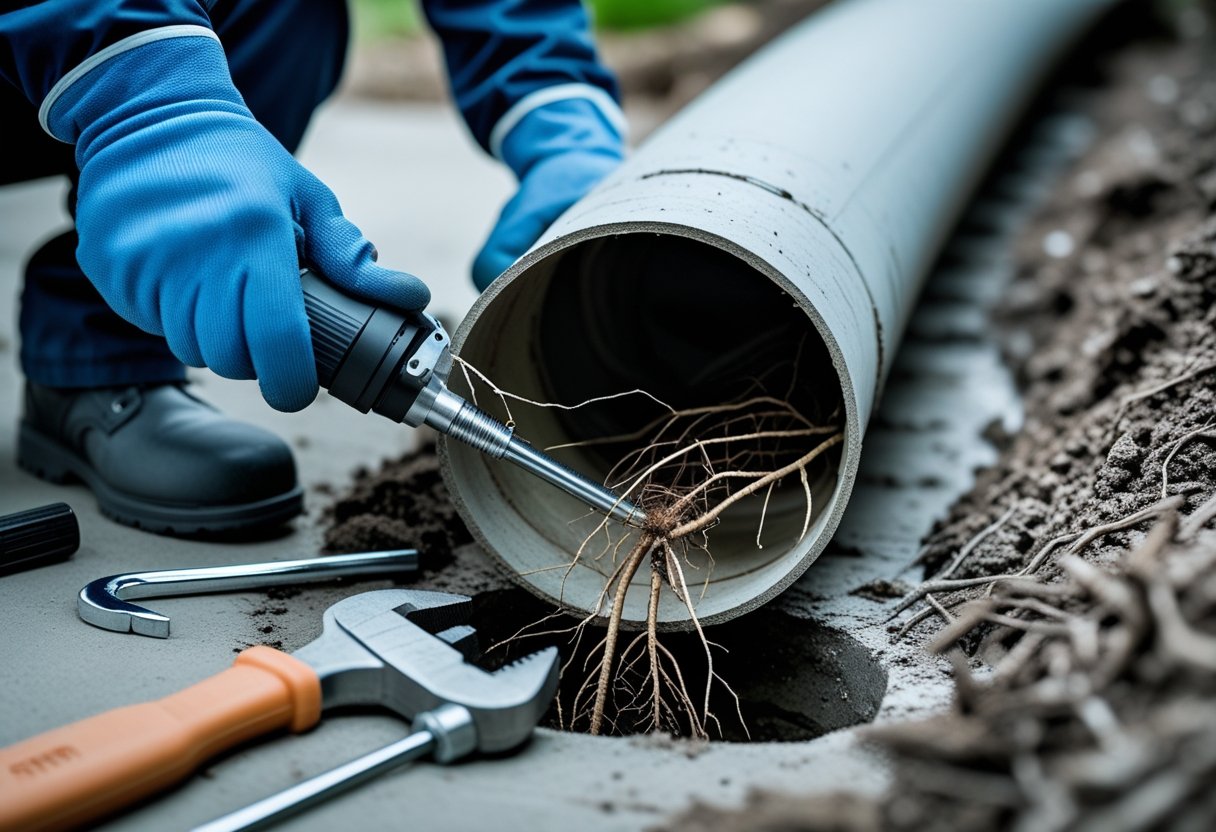
We look for small, repeated clues that point to roots entering a sewer line. Noticing patterns early like slow drains or odd smells helps us stop a small problem from becoming a full sewer backup.
Slow Drains and Frequent Clogs
Slow drains are often the first sign we see when roots start to invade a pipe. Water that used to clear quickly now pools in sinks, showers, or tubs. This can happen in one fixture or in several at once.
Frequent clogs that need snaking or chemical drain cleaners suggest a persistent obstruction inside the line. Roots catch hair and grease, creating partial blockages that slow flow. Over weeks, these partial clogs can turn into complete blockages that stop drainage entirely.
We watch for slow drains after we clear a clog. If the problem returns within days or weeks, that points to roots or a sewer line clog deeper than the trap. Keeping a log of when clogs happen helps us show a plumber where to inspect.
Gurgling Noises and Unusual Sounds
Gurgling is a strong early warning of root intrusion or a sewer line clog. We hear gurgling when air struggles past trapped water in a pipe. Toilets that gurgle after other fixtures run or sinks that burble when the washing machine drains signal airflow disruption.
Gurgling toilets often accompany slow drains and point toward a blockage in the main sewer line rather than just a local drain. These sounds can vary bubbling, gurgling, or popping and they usually get louder as the blockage grows.
We pay attention to when the sounds happen: after rain, while the dishwasher runs, or when multiple fixtures operate. That timing helps us determine if roots are affecting only a segment of pipe or the main line.
Sewer Odors and Foul Smells
Foul sewer odors inside or near the house can mean a sewer line leak or roots breaking through a pipe. We notice a rotten-egg or sewage smell inside basements, near drains, or in yards close to the sewer path.
Sewer odors often come with slow drains or gurgling. When roots damage pipe joints or create cracks, sewage can escape and smell. Odors outdoors near a cleanout or wet spot are a strong sign of a sewer line leak.
We use smell patterns to narrow the problem location. Persistent odors that spread after using water indicate an active leak or ongoing backup. If odors coincide with clogs or backups, we treat them as linked signs of root intrusion.
Recurring Backups and Wet Yard Spots
Recurring backups are the clearest sign that we may have significant root intrusion. When toilets or floor drains repeatedly overflow, or wastewater surfaces in the yard, roots may have caused a major sewer line clog or collapse.
Wet, soggy patches in the yard near the sewer path suggest a sewer line leak or sewage backup. The soil may be damp even when it hasn’t rained. These spots can appear near tree roots or along the property line where the main sewer runs.
We document each backup event and any wet yard locations. Repeated backups after snaking, or backups that follow heavy rain, often mean roots have created a partial collapse or severe blockage. This pattern usually requires a camera inspection and professional root removal or pipe repair.
Diagnosing and Assessing Root Intrusions
We focus on finding where roots enter the sewer and how severe the damage is. Accurate diagnosis guides whether we clear roots, repair pipe sections, or replace the line.
Sewer Camera Inspection Methods
We use a sewer camera to see inside the pipe and locate root intrusions precisely. A flexible rod with a waterproof camera travels through the sewer, sending live video to a monitor so we can spot root size, entry points, and pipe cracks.
We note pipe material, joint offsets, and root density on video. We mark distance from the cleanout or house using the camera’s built-in meter so repair crews know exact locations. Photos or clips get saved for records and to compare after any work.
We combine camera footage with simple tests like running water or smoke tests to confirm flow paths. This helps us decide if roots only need mechanical removal or if a failed joint or fracture requires repair.
The Role of Professional Plumbers
We rely on professional plumbers to operate the sewer camera and interpret findings. Trained plumbers distinguish between surface debris, small feeder roots, and aggressive root masses that threaten structural failure.
Plumbers also perform targeted drain cleaning using root cutters, hydro-jetting, or chemical root treatments when appropriate. They advise on longer-term fixes such as spot pipe repair, pipe lining (CIPP), or full replacement based on camera evidence.
We expect licensed professionals to provide a written report with video, distance markers, and recommended next steps. This helps us plan cost, timeline, and choose the correct repair method to prevent recurring intrusions.
Addressing and Preventing Sewer Line Root Intrusion
We focus on fast, effective ways to remove roots and stop them from coming back. Our choices include mechanical cutting, high-pressure cleaning, chemical treatments, and trenchless pipe repairs.
Mechanical and Hydro Jetting Root Removal
We use mechanical root cutting and hydro jetting to remove roots inside pipes. Mechanical root cutting uses rotating blades or augers on a drain machine to slice roots. This works well for moderate growth and gives immediate flow restoration.
Hydro jetting blasts water at 3,000-4,000 psi to wash roots and debris from pipe walls. It clears grease, scale, and fragile roots better than a blade alone. Technicians inspect with a camera before and after to confirm cuts and check for pipe damage.
We choose mechanical cutting when roots are thick and localized. We pick hydro-jetting for long runs of roots, heavy buildup, or when we suspect recurring blockages. Both methods do not fix damaged pipe joints or large cracks.
Chemical Root Treatment Options
We apply chemical root killers to slow root regrowth when mechanical removal is done. Foaming root killers and copper sulfate products penetrate root fibers and kill the living tissue inside the pipe. We follow label directions for dose and frequency typically every 6-12 months for active regrowth.
We use foaming root killer when we need the chemical to cling to pipe walls and reach lateral connections. We avoid overuse of harsh chemicals near sensitive soil or water sources. Safety gear and proper disposal matter; we never mix chemicals or apply inside wells.
Chemical treatment is a maintenance tool, not a permanent fix. It reduces the need for frequent mechanical cuts but won’t repair broken pipes or close root entry points.
Trenchless and Pipe Lining Solutions
We install trenchless repairs to fix pipe defects that invite root intrusion. CIPP (cured-in-place pipe) lining creates a seamless new pipe inside the old one using a resin-saturated liner cured in place. This seals cracks and bellies and prevents roots from entering through joints.
Pipe bursting replaces old pipe by fracturing it outward while pulling a new pipe in. We use this when pipe diameter or alignment must change. Both methods avoid open trenches, reduce landscaping damage, and provide a long-term barrier against roots.
We perform a camera inspection first to choose the right trenchless option. CIPP works for many damaged lines; pipe bursting fits when full replacement is needed or when the existing pipe is severely collapsed.
Long-Term Prevention Strategies
We recommend a mix of monitoring, physical barriers, and plant choices to stop roots from returning. Install root barriers plastic or metal sheets vertically between trees and sewer lines to block lateral root growth. Place them at least 2-3 feet deep or deeper based on local tree species.
We advise homeowners to plant low-root or slow-growing trees away from sewer easements. Regular camera inspections every 1-3 years catch regrowth early. Combine periodic chemical root-killers with inspections after mechanical or hydro-jetting work to extend the time between services.
We also repair any pipe defects promptly. Sealed joints, CIPP lining, or pipe replacement prevent roots from finding entry points. Consistent maintenance saves money and prevents emergency sewer line replacement later.