Sewer line problems can turn small maintenance issues into expensive repairs if we don’t handle them correctly. Many people overlook simple steps that could keep their system running smoothly for years. By learning which mistakes to avoid, we can prevent clogs, leaks, and unnecessary damage before they start.
Our goal is to make sewer line care easier to understand and manage. We’ll go over the most common maintenance errors, what causes them, and how to fix or avoid them. This way, we can protect our property, save money, and keep our system working as it should.
Fundamental Sewer Line Maintenance Mistakes
Many sewer line problems come from habits or maintenance steps we overlook. When we skip routine checks, misuse drains, or treat symptoms instead of the cause, we risk expensive repairs and possible sewage backups.
Neglecting Routine Inspections
Routine sewer line inspections help us spot issues before they lead to major blockages. When we ignore these inspections, small cracks or root intrusions can grow into serious damage. A camera inspection shows buildup, leaks, and other hidden problems early.
We should schedule professional inspections every one to two years, especially in older homes or areas with large tree roots. This simple step prevents emergency repairs and keeps the main sewer line in good condition.
Missing these inspections can cause slow drains, pooling water, or unexpected odors. Regular checks allow plumbers to identify early warning signs that we might miss. By prioritizing preventive maintenance, we reduce costly repairs and avoid replacing the entire line later.
Improper Waste Disposal Habits
Everything we flush or pour down the drain affects our plumbing system. Items such as grease, food scraps, coffee grounds, paper towels, and feminine hygiene products easily create clogs and blockages. These build up over time, narrowing the pipe and slowing water flow.
We should keep a short list of what belongs in the drain:
| Safe Items | Unsafe Items |
|---|---|
| Water, biodegradable liquid soap | Fats, oils, grease |
| Toilet paper (in small amounts) | Coffee grounds, wipes, paper towels |
Pouring grease or oil down the sink may seem harmless, but it hardens once it cools and sticks to the pipe walls. Over time, that layer traps debris, forming a solid blockage that restricts wastewater flow.
Proper waste disposal protects the sewer system and reduces the need for frequent drain cleaning. We can also use screens to catch food particles before they enter pipes. Small habits like these go a long way in protecting our home’s plumbing.
Ignoring Early Warning Signs
Many of us overlook early symptoms that show a sewer line clog is starting. Slow drains, foul odors, and gurgling sounds often mean that buildup or a blockage is forming. When we ignore these signs, the problem grows until sewage backs up into sinks or toilets.
Simple actions can prevent damage. If drains slow in multiple fixtures at once, the issue often lies in the main sewer line, not individual pipes. Calling a professional plumber at this stage can prevent a costly sewage backup.
Small repairs and preventive maintenance cost far less than replacing pipes or cleaning contaminated water. Paying attention to early clues protects both our budget and home.
Relying on Chemical Drain Cleaners
Chemical drain cleaners promise quick results, but repeated use can harm our sewer lines. These products often contain strong acids that eat through metal or plastic pipes over time. They may clear minor surface buildup but rarely solve deeper blockages.
Instead, we should use enzyme-based cleaners or schedule professional drain cleaning services. Enzyme cleaners break down organic matter safely and won’t damage pipes. Regular maintenance using these gentle options keeps the plumbing system functioning longer.
When we depend on harsh chemicals, we trade short-term fixes for long-term damage. The safer, more effective method is professional cleaning paired with consistent routine sewer line inspections. This approach keeps the lines clear and reduces future repairs.
Installation and Structural Mistakes to Avoid
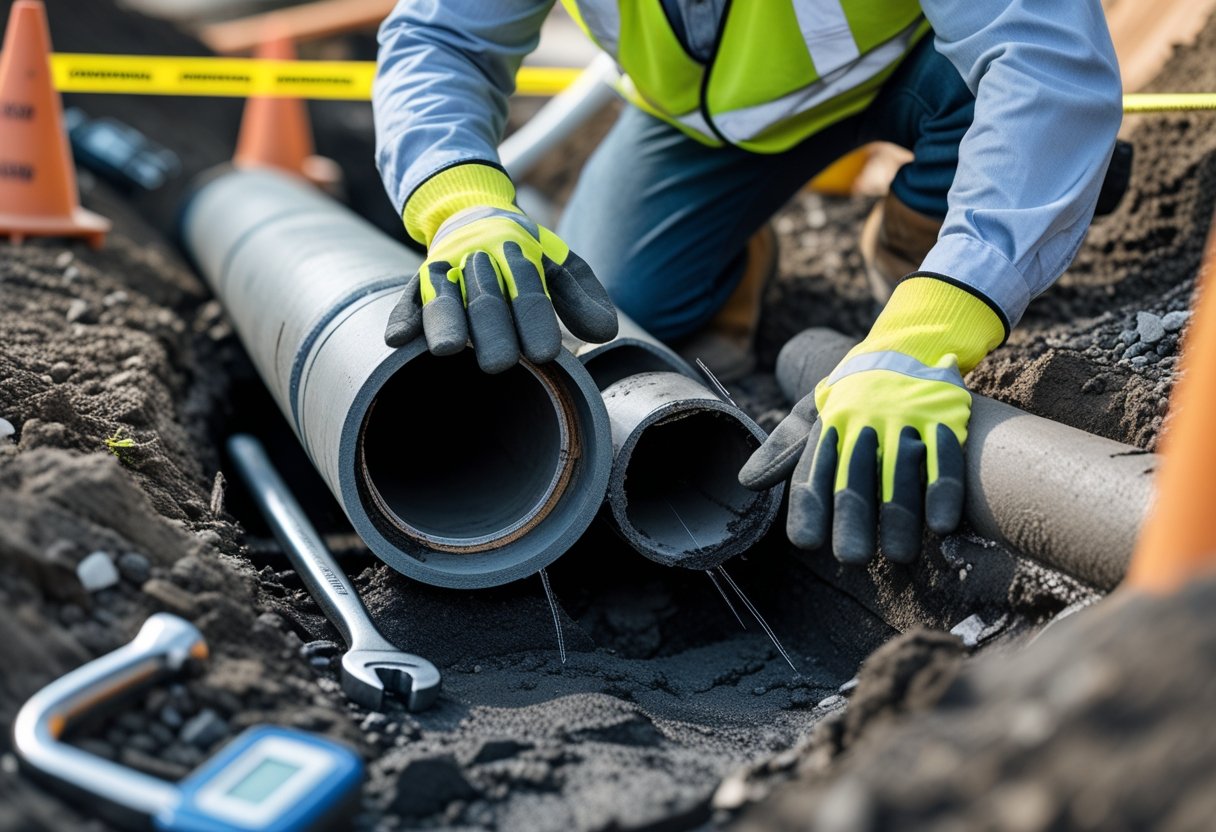
We can prevent many future sewer line failures by paying attention to installation and structural details. Problems often come from using the wrong materials, poor grading, weak trench support, or skipping code requirements. Careful planning and quality control during installation protect both performance and compliance.
Incorrect Pipe Material Selection
Choosing the wrong pipe material can lead to cracks, leaks, or premature failure. We must match the pipe material to the soil conditions and type of plumbing system. For example, clay and cast-iron pipes work well in stable soil, while PVC resists corrosion in damp areas. Using the wrong material for the main sewer line increases repair costs later.
Before installation, we evaluate corrosion potential, load strength, and chemical resistance. PVC pipes are lightweight and easy to handle but can deform under heavy pressure. Ductile iron is stronger but more expensive. A small table helps guide material choice:
| Material Type | Best Use | Main Drawback |
|---|---|---|
| PVC | Residential areas with stable soil | May warp under heavy loads |
| HDPE | Corrosive or shifting soils | Requires specialized joints |
| Ductile Iron | High-traffic or commercial zones | Higher cost |
| Clay | Older systems or low-impact zones | Brittle and hard to cut |
Selecting based on local soil reports and building codes ensures long service life and fewer maintenance issues.
Improper Slope and Grading
If we set the wrong slope, wastewater either flows too fast or moves too slowly. A slope that’s too steep leaves solids behind, while a flat line causes clogs. The ideal gradient varies by pipe size but often falls between 1/8 inch to 1/4 inch per foot for typical residential installations.
We confirm slope and grading with laser levels or string lines during installation. Even small dips, called bellies, can trap debris. Checking the slope again before backfilling helps prevent future blockages.
Environmental conditions, such as changes in soil settlement or nearby construction, can also shift the pipe’s alignment. Routine inspections during the first year help us catch minor slope errors early.
Poor Trench Preparation and Bedding
A well-prepared trench supports the sewer line and prevents cracking. We must remove large rocks, roots, and uneven surfaces before laying the pipe. The base layer, or bedding material, should be stable and provide uniform support-usually compacted sand or fine gravel.
Proper bedding steps:
- Compact the trench floor.
- Spread 4-6 inches of bedding material.
- Set the pipe evenly and align joints straight.
- Backfill with care to avoid pipe movement.
Ignoring these steps leaves gaps where a pipe can sag or shift under pressure. Soft soil conditions may require additional stabilization or reinforced bedding. We always test the trench for firmness before installation begins to avoid uneven load distribution.
Neglecting Compliance With Local Codes
Failing to follow local building codes and plumbing codes can delay approval, lead to fines, or force us to redo the work. Codes specify acceptable materials, connection types, and minimum burial depths for the main sewer line.
We consult local authorities before any major sewer line installation. Simple steps, such as submitting plans for review or scheduling inspections, ensure our work meets legal and safety standards. For example, one city might allow PVC for all underground work, while another may require cast iron within certain limits.
Ignoring code compliance not only risks penalties but can also void insurance or warranties. Proper documentation gives us proof that our system meets public health and safety requirements.
Common Causes of Sewer Line Problems
Many sewer line problems come from physical damage, chemical reactions, or poor maintenance habits. Common factors include root invasion, buildup of waste or grease, corrosion from age or soil conditions, and sagging or leaking pipes.
Tree Root Intrusion and Root Barriers
Tree root intrusion is one of the most frequent issues in underground sewer systems. Roots seek moisture and nutrients, often pushing through small cracks or joints in the pipes. Once inside, they grow rapidly, blocking flow and causing pressure that can crack the pipe further.
We often see this problem in older sewer lines made from clay or concrete. Plastic or PVC pipes are less prone to cracking but can still be affected if joints loosen. Over time, these intrusions lead to backups, slow drainage, or complete blockages.
Installing root barriers and maintaining a safe distance between trees and the sewer line helps prevent intrusion. Root barriers force roots to grow away from underground pipes. Regular inspection using a camera can detect early signs of root infiltration, allowing us to remove roots before they cause major damage.
Grease Buildup and Blockages
Grease buildup is a preventable but common cause of sewer line blockages. When cooking oils, fats, or grease enter the drains, they cool, harden, and stick to pipe walls. Over time, these deposits collect debris such as food particles, creating a thick layer that restricts water flow.
Even small amounts of grease added regularly can form a significant blockage. This problem often starts in kitchen sink drains and extends into the main sewer line. Once flow is reduced, sewage can back up into sinks or floor drains.
To prevent this, we should avoid pouring grease down the drain and instead use grease traps or containers for disposal. Commercial kitchens are required to install and maintain grease traps to limit buildup. For homes, periodic cleaning and enzyme-based products can help break down small amounts of residue before it hardens.
Corrosion and Deterioration
Pipe corrosion weakens sewer lines and reduces flow capacity. Metal pipes, particularly cast iron and steel, are prone to corrosion from chemical reactions between wastewater, oxygen, and the metal surface. Over decades, rust and mineral deposits thin the walls, leading to cracks or leaks.
Soil conditions also affect corrosion. Acidic or highly moist soil accelerates deterioration, especially when pipes are uncoated or improperly installed. Corrosion not only causes leaks but also roughens the interior surface, slowing water movement and increasing the risk of blockages.
We can extend pipe life with protective coatings, cathodic protection, or newer materials such as PVC or lining systems. Pipe lining creates a smooth, noncorrosive layer inside existing pipes, sealing small leaks and preventing further rust or scaling.
Bellied and Leaking Pipes
Bellied pipes occur when a section of the sewer line sags due to shifting soil, ground settling, or poor installation. This “belly” traps water and solid waste, slowing flow and causing repeated clogs. The collected debris creates pressure that can lead to cracks or leaks in nearby sections.
Leaking pipes also develop from joint separation, corrosion, or external damage. Escaping wastewater can soften the surrounding soil, worsening the sag and causing further misalignment.
Early detection with video inspection helps identify low spots and leaks before serious failure occurs. Repair options include pipe replacement, trenchless correction, or relining to restore slope and seal joints. Regular maintenance and monitoring are essential to maintain a stable and efficient sewer system.
Optimizing Sewer Line Repairs and Maintenance
We can extend the lifespan of our sewer system by staying proactive, using modern inspection tools, and responding quickly to early signs of trouble. Proper cleaning, timely repairs, and trained professionals all play key roles in keeping sewer lines clear, safe, and efficient.
Delaying Professional Assistance
Waiting too long to call a professional plumber often leads to larger, costlier sewer line repairs. Minor blockages or slow drains that seem manageable can quickly develop into full-scale backups or pipe breaks. We should act as soon as we notice changes such as foul odors, gurgling sounds, or recurring clogs.
Hiring professional plumbers early helps identify hidden issues using tools like sewer cameras or camera inspections. These methods allow us to see the pipe interior directly, confirming whether the blockage comes from grease buildup, root intrusion, or pipe damage. A trained plumber can then plan the most effective repair method without unnecessary digging.
When we delay repairs, we risk environmental contamination and damage to nearby property. Routine sewer line inspections and fast responses save both time and money by avoiding emergency calls. Maintaining a schedule with a trusted plumbing service creates accountability and ensures problems don’t go unnoticed.
Insufficient or Improper Sewer Line Cleaning
Using the wrong cleaning methods or skipping regular cleaning can shorten the life of our sewer lines. Some homeowners rely solely on chemical drain cleaners, which can corrode pipes and harm the system over time. Instead, plumbers use hydro jetting (or hydrojetting) to clean lines safely and thoroughly.
This process uses high-pressure water to remove grease, sludge, and roots without damaging the pipe walls. We should schedule preventive maintenance cleanings once a year, especially for older homes or those with large trees nearby. Hydro jetting prevents recurring clogs and helps maintain consistent water flow.
An effective cleaning plan includes documenting each service visit and noting areas that frequently clog. Cooperation between homeowners and plumbers ensures that recurring issues get proper attention rather than temporary fixes.
Overlooking Preventive Repairs
Ignoring small defects in sewer lines increases the likelihood of major system failures. Cracked joints or partial collapses may appear minor at first but grow worse under daily pressure. By investing in preventive repairs, we can avoid bursts that require full sewer line repair and excavation.
Preventative maintenance should include sealing minor leaks, realigning sagged sections, and replacing weakened pipe segments. Early intervention reduces long-term costs and limits the chances of sewage overflow. We can ask our plumber for a maintenance plan that fits our property’s age and usage.
Using tracking records or maintenance logs helps identify patterns of deterioration. This organized approach ensures timely interventions and keeps the system functional without unexpected shutdowns.
Failing to Use Modern Inspection Techniques
Old-fashioned guesswork often led to unnecessary digging and incomplete repairs. Today, video camera inspection and sewer scope inspection give us clear visuals of the problem area. These technologies help pinpoint cracks, tree root intrusion, and buildup accurately.
Sewer cameras reduce repair time by locating exact defect points, allowing plumbers to plan shorter and less invasive fixes. This saves landscaping and reduces labor costs during sewer line repairs. We should request a camera inspection before starting any major maintenance project to confirm the true condition of the pipes.
Routine sewer line inspections using these methods also document the pipe’s health over time. The data helps us compare changes between inspections and determine when cleaning or repairs are due. This evidence-based approach supports long-term sewer system stability and safety.