Seasonal changes don’t just affect how we dress or maintain our lawns; they also influence what happens underground. Temperature shifts, moisture levels, and soil movement can all impact the condition of our sewer lines in ways that aren’t always visible. Seasonal changes affect sewer line health by causing expansion, contraction, and blockages that can lead to leaks or backups if left unchecked.
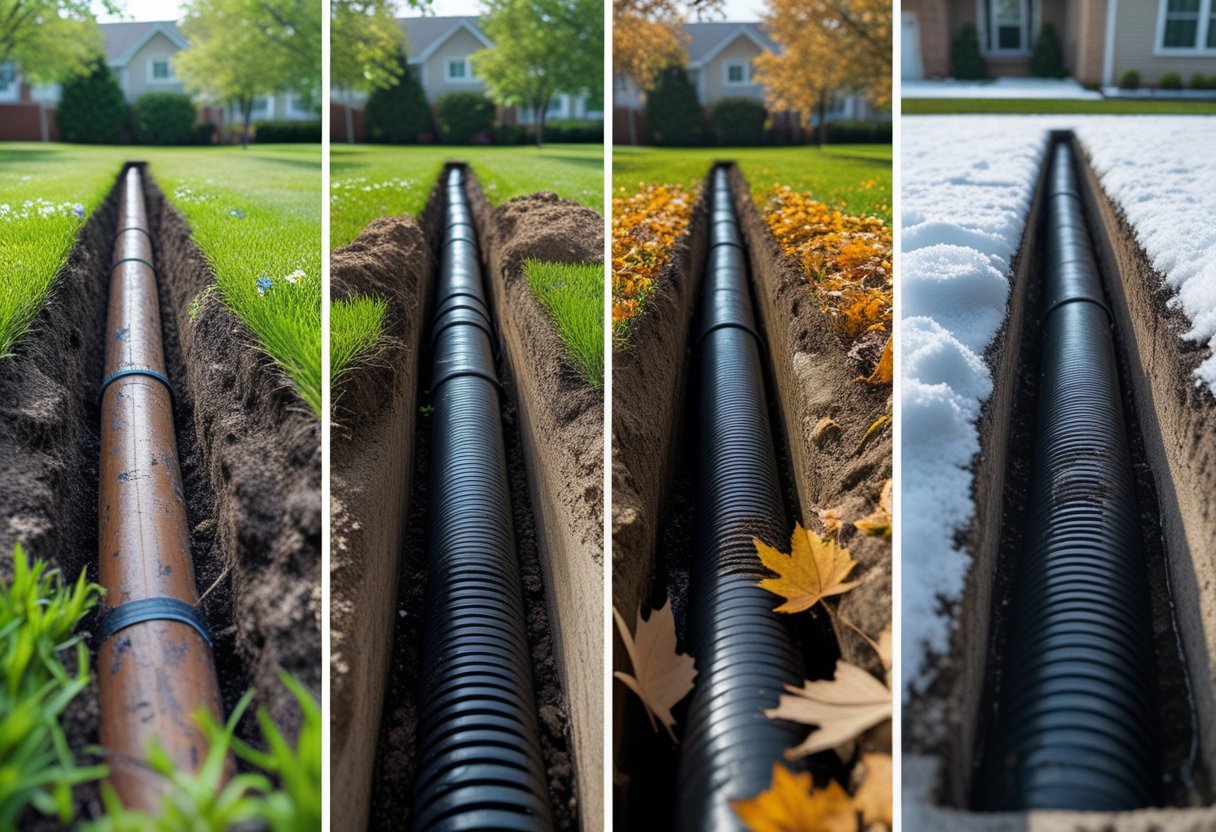
We often notice sewer problems after heavy rain, a sudden freeze, or a long dry spell. Each season brings its own challenges, from frozen pipes in winter to root growth in spring and summer. By understanding how the ground and weather affect our plumbing systems, we can better prevent costly repairs.
Our goal is to explore how each season impacts sewer line performance and what steps we can take to protect these hidden parts of our property year-round.
The Impact of Seasonal Changes on Sewer Line Health
Seasonal changes influence how sewer lines perform and how long they last. Shifts in temperature, rainfall, and soil moisture affect underground pipes, leading to leaks, blockages, or structural damage if not managed properly.
Temperature Fluctuations and Underground Pipes
When weather changes quickly, pipes expand and contract. In cold months, frozen ground puts pressure on sewer lines and can cause cracks in older or brittle materials. As temperatures rise, thawing soil shifts and loosens pipe joints.
Metal and plastic pipes react differently to temperature swings. Plastic may warp or separate at joints, while metal pipes face stress from soil movement. Repeated freeze-thaw cycles often weaken seals, allowing groundwater to seep in or wastewater to leak out.
We can reduce damage by:
- Insulating exposed lines near surface areas
- Monitoring temperature patterns to predict stress points
- Repairing leaks early before cracks extend
These steps help maintain steady water flow and protect the sewer system from temperature-related strain.
Heavy Rainfall and Sewer Backups
Periods of heavy rainfall increase the load on the sewer system. When stormwater enters through cracks or faulty connections, the extra inflow overwhelms sewer pipes meant for wastewater only. This can push water back into homes or streets.
Soil around underground pipes also becomes saturated, adding weight and pressure that may shift or collapse weaker sections. Flooded soil makes small breaks grow larger over time.
To reduce these risks, we can:
- Inspect for inflow and infiltration regularly
- Keep storm drains clear of leaves and debris
- Install backflow valves in flood-prone areas
Proper drainage planning limits backups and keeps the system operating safely during heavy rainfall.
Effects of Drought and Soil Contraction
During droughts, dry soil loses moisture and contracts around underground pipes. The shrinking soil leaves empty spaces that cause pipes to settle unevenly. Over time, this movement forms cracks and joint gaps.
Soil type plays a major role. Clay-rich soils shrink the most when dry, increasing stress on buried sewer lines. Even small changes in moisture can shift alignment or cause leaks.
We can help prevent damage by:
- Maintaining steady soil moisture near sewer lines
- Checking for sagging or displaced pipes during inspection
- Replacing brittle sections in high-risk areas
Consistent care during drought conditions keeps sewer lines stable and extends the life of the entire sewer system.
Common Sewer Line Problems Across the Seasons
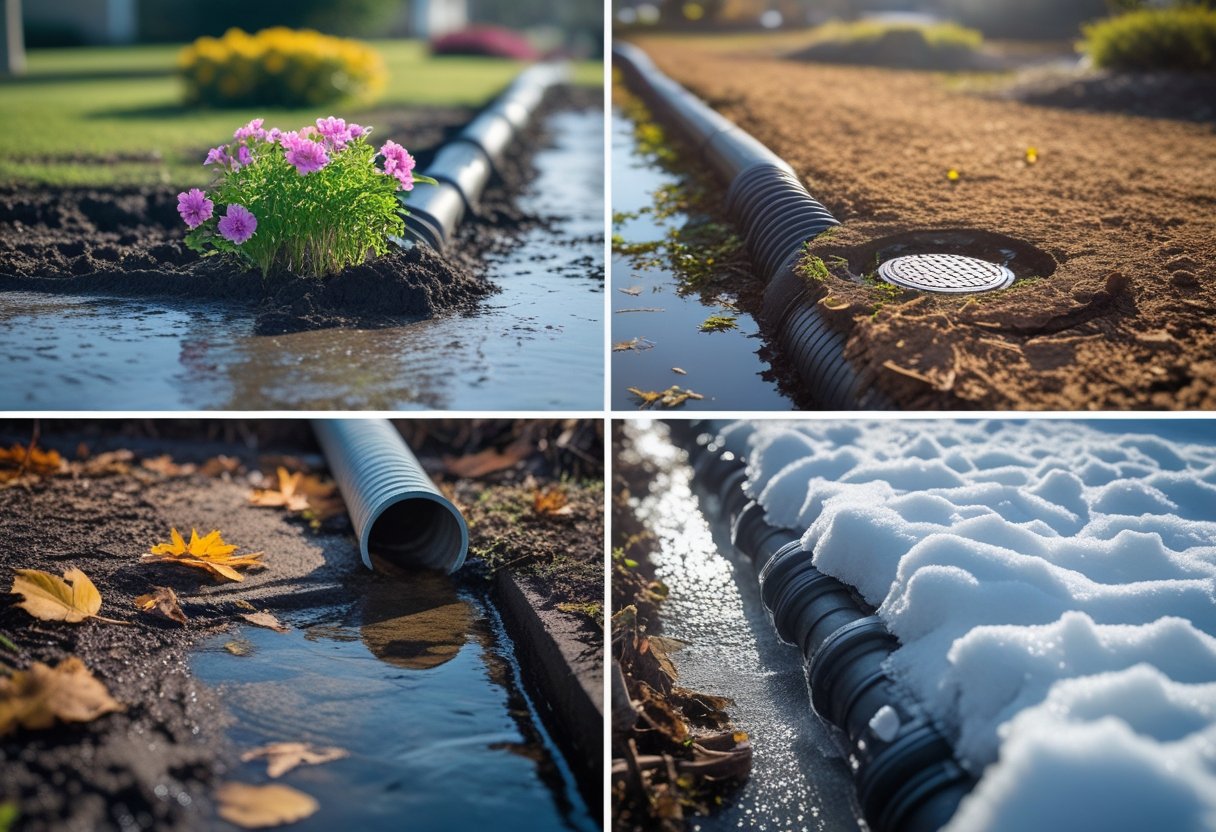
Changes in temperature, moisture, and soil movement can cause different sewer line issues throughout the year. These shifts often lead to clogs, leaks, and pressure changes that weaken pipes and impact how wastewater flows.
Blockages and Root Intrusion
Blockages occur when debris, grease, or non-flushable items collect inside pipes. In warmer months, heavy rainfall can wash dirt and small particles into drains, while summer gatherings often increase kitchen waste and strain the system. Over time, buildup restricts water flow and causes slow drains and backups.
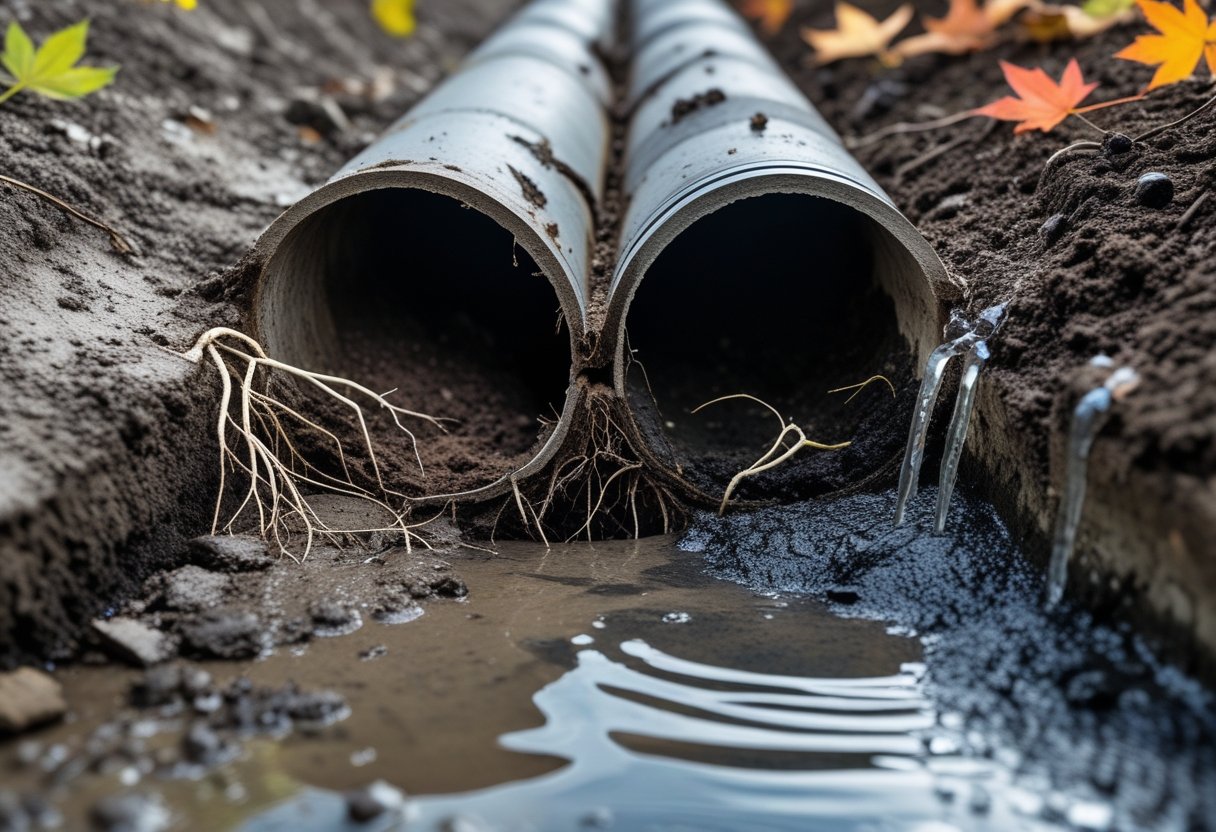
Tree roots are another major issue. During dry or warm weather, roots seek moisture and can invade small pipe cracks. This root intrusion grows worse over time, as roots expand and force joints apart, creating misalignment or full blockages.
We often see the most severe tree root intrusion in older clay or cast-iron pipes. Regular inspection using camera equipment helps locate problem areas before they cause costly damage. Hydro jetting or mechanical root removal keeps pipes clear and reduces further root growth.
Frozen Pipes and Pipe Bursts
Cold temperatures, especially in late fall and winter, can freeze standing water inside sewer lines. When this happens, frozen pipes expand and place strong pressure on pipe walls. That pressure can lead to cracks, leaks, or full pipe bursts.
Frozen sections often appear in shallow or uninsulated lines. Poor drainage slope or standing water makes the problem worse because ice builds up around the blockage. Once pipes thaw, leaks can occur where the material has weakened.
To reduce the risk, we insulate exposed sections, maintain consistent indoor temperatures, and keep drains running during unusually cold periods. If a line freezes, it’s important to thaw it slowly and avoid using open flames, which can cause further damage.
Slow Drains and Foul Odors
Slow drains usually signal buildup or pipe misalignment. Grease, soap, and small debris often stick to pipe walls, reducing flow. In older systems, soil movement can shift pipes slightly, forming dips or offsets where waste collects. As water sits longer, foul odors may escape through household drains.
These odors often come from trapped gases in partial blockages. Dry weather can also lower water levels in traps, letting smells enter living spaces. Seasonal temperature changes affect how gases rise through vent stacks and can increase odor intensity indoors.
Routine cleaning can prevent buildup. We also recommend checking vent pipes for blockages like leaves or nests. A simple test with running water helps detect slow drains before major backups occur.
Flooding and Sewer Backups
Heavy rainfall and rapid snowmelt place extreme stress on municipal sewer systems. When drainage systems reach capacity, excess water can force sewage back through household lines. This sewer backup can damage floors, walls, and belongings.
Flooding also contributes by loosening soil around buried lines, causing small shifts and slight pipe misalignment. Even minor cracks let groundwater enter pipes, reducing their flow capacity and increasing pressure across the network.
Homeowners can lower the risk by installing backwater valves, keeping sump pumps maintained, and grading soil to direct surface water away from the foundation. Cleaning gutters and downspouts before storms helps reduce runoff entering the sewer system.
Season-Specific Challenges and Solutions
Seasonal shifts change how our sewer systems perform. Temperature, moisture, and outdoor activity all affect pipe condition, water flow, and drain performance, often requiring different maintenance practices to prevent costly damage.
Spring Thaw and Heavy Rains
When snowmelt and spring rains increase ground moisture, sewer lines handle a much higher water load. The added flow can force groundwater into cracks or joints, causing infiltration that strains municipal and residential systems.
We often see tree roots becoming active again during this time. Roots seek moisture and can enter small pipe openings, leading to slow drains or blockages. Regular camera inspections help spot these issues early.
To protect pipes, we should:
- Schedule a seasonal plumbing inspection.
- Check sump pumps and backwater valves for proper operation.
- Clear debris from outdoor drains to allow smooth water flow.
Addressing these points reduces sewer backups and minimizes flood risks during heavy rains.
Summer Heat and Increased Water Usage
Hot weather raises household water use, especially when sprinklers and outdoor spigots run daily. This surge increases strain on sewer lines, particularly older pipes with limited capacity.
Summer heat can also dry out pipe joints and seals. Lower soil moisture sometimes shifts soil structure, misaligning buried pipes. We should watch for warning signs such as slow drains or foul odors from floor drains.
To manage summer demand:
- Use sprinklers efficiently and water lawns during cooler hours.
- Inspect outdoor spigots for leaks that waste water and overload systems.
- Consider scheduling mid-year checks for any leaks or misalignment.
These measures help us maintain stable flow and reduce wear during peak water use months.
Fall Leaves and Outdoor Drainage
Falling leaves and yard debris easily clog outdoor drains. Blocked drains prevent water from flowing away from foundations, which can send runoff toward sewer inlets or basement drains.
We should remove leaves from gutters and storm grates regularly. A simple checklist helps:
| Task | Frequency | Benefit |
|---|---|---|
| Clear gutters | Weekly | Prevent overflow |
| Rake leaves | As needed | Reduce drain blockages |
| Inspect outdoor drains | Monthly | Maintain surface drainage |
An early sewer line cleaning before freezing weather also keeps buildup from becoming hardened deposits later. Keeping outside drainage clear reduces stress on the system and helps keep interior plumbing dry.
Winter Freezing Temperatures
Low temperatures cause water inside or around pipes to freeze, expanding and putting pressure on pipe walls. Even small cracks can widen, leading to leaks when the ice thaws.
We can prevent this by insulating exposed or shallow lines and disconnecting outdoor hoses. Outdoor spigots should be drained and covered to avoid freezing. Running a small trickle of water during extreme cold helps prevent freezing in vulnerable sections.
We also advise checking backwater valves before winter storms. They keep wastewater from flowing backward into homes when main lines freeze or clog. Consistent winter preparation reduces emergency calls and expensive mid-season repairs.
Proactive Sewer Line Maintenance for All Seasons
We can prevent sewer line damage by planning routine inspections, keeping drains clear, and acting quickly when problems appear. Regular care keeps our plumbing system reliable and lowers the chance of costly sewer line repair or replacement.
Importance of Sewer Line Inspection
Seasonal temperature changes cause soil to expand and contract, which can stress sewer pipes. A sewer line inspection helps us spot cracks, leaks, or root intrusion before serious damage occurs. Using a camera inspection gives clear images of pipe interiors, allowing us to find blockages or corrosion early.
We should schedule sewer inspections at least once a year, especially before winter. Early detection saves time and reduces the need for emergency sewer maintenance. Small leaks found in fall can be repaired before freezing temperatures make them worse.
Common inspection tools include:
- Camera scopes for visual assessment
- Moisture detectors for leak detection
- Pressure gauges to identify hidden clogs
Taking these steps helps us maintain steady water flow and prevents backups that lead to gurgling noises or foul odors inside the home.
Drain Cleaning and System Upkeep
Clogged drains put strain on the entire drainage system. Regular drain cleaning prevents buildup of grease, soap, and organic debris that restrict water flow. We can use enzyme-based cleaners or mechanical tools like drain snakes for routine cleaning.
Professional drain cleaning once or twice a year helps remove deeper obstructions. Experts use hydro-jetting equipment to flush the pipes without damaging them. This method restores full capacity to older pipes that have years of buildup.
To keep drains clear between cleanings:
- Avoid pouring fats, oils, and grease down sinks.
- Install drain strainers to catch hair and debris.
- Run hot water through drains weekly to prevent residue buildup.
These small habits support the efficiency of the plumbing system and reduce the risk of sewer backups in heavy rain or snowmelt.
When to Seek Professional Help
Some sewer issues need expert assessment. Frequent gurgling noises, persistent clogs, foul odors, or slow drainage can signal damage beyond our reach. In these cases, calling licensed plumbers ensures accurate diagnosis and safe sewer line repair.
Professionals use video equipment, smoke testing, and trenchless technology to locate and fix problems efficiently. They can also identify whether a pipe needs full sewer line replacement or minor patching.
We should seek help immediately if wastewater backs up into sinks or tubs. Delays can cause contamination and structural damage. Timely professional service protects our property and maintains the long-term performance of the entire drainage network.